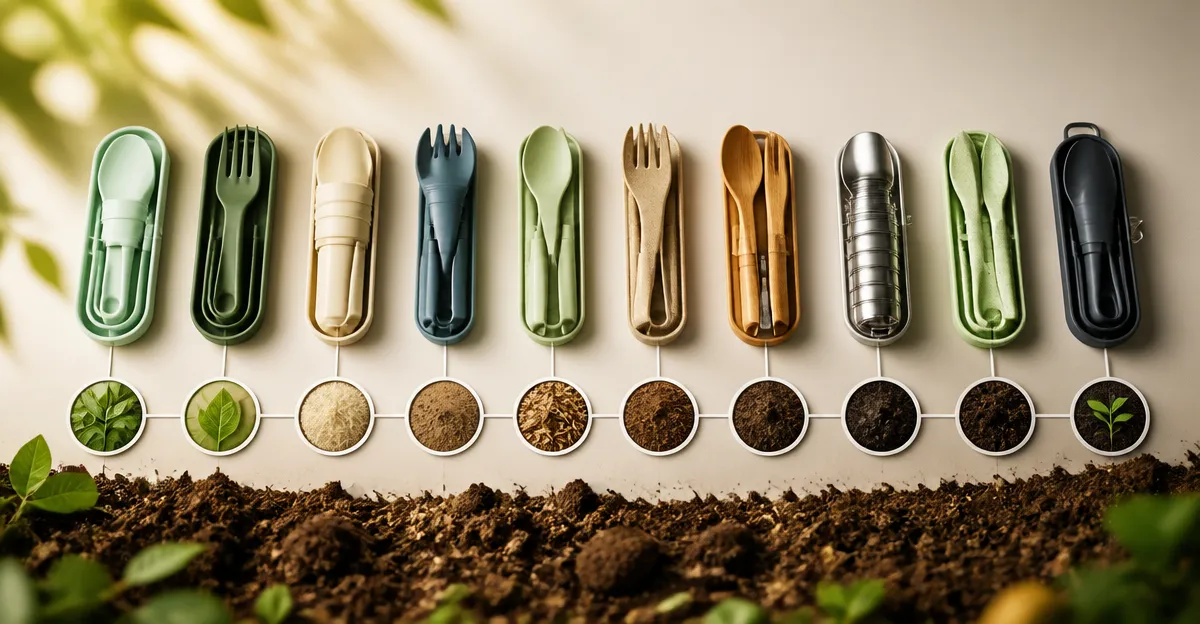
10 Collapsible Utensils and Their Biodegradation Timelines: How Long Each Material Takes to Break Down
Introduction
Modern travelers and outdoor enthusiasts increasingly seek compact, reusable cutlery that reduces waste while fitting into limited luggage space. Collapsible utensils meet these demands, yet the environmental impact of each material varies dramatically, influencing how quickly discarded pieces return to nature.
Understanding the biodegradation timelines of stainless steel, food‑grade plastic, wheat‑straw composites, and other polymers empowers readers to select products that align with personal sustainability goals. The following list combines scientific insight with real‑world product recommendations, each sourced from Amazon and evaluated through price, features, and customer sentiment.
Top 10 Collapsible Utensil Selections
- Stainless‑Steel Essentials
Stainless steel offers unrivaled durability and is fully recyclable, though it does not biodegrade in the traditional sense. The Quatish Travel Utensil Set exemplifies this category, providing a fork, spoon, knife, chopsticks, and a waterproof case for $7.49. With a 4.8‑star rating from over 7,200 reviews, users praise its sharpness, dishwasher safety, and the elastic‑band case that prevents rattling. A second stainless‑steel option, the Acantha Foldable Fork and Spoon Set, focuses on a minimalist two‑piece design for $6.99 and holds a 4.4‑star rating. Both sets illustrate how metal utensils can endure years of use, ultimately entering recycling streams rather than landfills. - Food‑Grade Polypropylene (PP) Collapsibles
PP is a lightweight plastic that resists breakage and is dishwasher safe, yet it degrades over decades under optimal conditions. The JIABEIUS Collapsible Utensil Set offers four colour‑coded sets for $7.99, each containing a fork, spoon, knife, and chopsticks. Customers note the vibrant hues and sturdy feel, though they caution that the knives are not razor‑sharp. PP typically requires 30‑40 years to break down, making reuse essential to minimize environmental burden. - Wheat‑Straw Composite Sets
Wheat‑straw composites blend natural fibers with biodegradable polymers, achieving a decomposition window of 6‑12 months in compost conditions. The Ouliget Collapsible Utensil Set showcases this technology in pink and blue variants for $9.90, earning a 4.9‑star rating from nine reviewers. Users appreciate the lightweight feel and the fact that the fork does not pierce other items in a bag. Similarly, the YDYTOP Reusable Travel Utensils Set supplies four colour sets for $5.99, with a 4.7‑star rating from over 5,700 reviews. Both products highlight how natural‑based materials can dramatically shorten end‑of‑life impact. - Compact Cases for Urban Commuters
Urban commuters often store utensils in backpacks or briefcases, requiring cases that resist moisture and protect other belongings. The Quatish set includes an aluminum‑foil lined case that prevents rust and contains an elastic band to stop rattling. Reviewers describe the case as “thin but sturdy” and ideal for lunch‑box storage. The JIABEIUS sets also provide individual cases, each colour‑coded for easy identification, which users find helpful for “travel essentials packs.” - Multi‑Tool Designs with Chopsticks
Including chopsticks expands cultural versatility, especially for Asian cuisine. Both Quatish and Ouliget integrate laser‑etched chopsticks that resist slipping, while the YDYTOP set supplies a dedicated chopstick pair in each colour. Customer comments highlight the convenience of having “a little set of silverware” that covers soup, noodles, and salads without needing additional tools. - Weight‑Sensitive Options for Backpacking
Backpackers prioritize gram‑level weight reductions. The wheat‑straw Ouliget set weighs less than 30 g, and its case fits into a side pocket. The JIABEIUS collapsible design folds flat, allowing it to slide into a pocket without adding bulk. Users report that these sets “fit in pockets or small bags” and are “lightweight yet sturdy.” - Durability for Family Travel
Families benefit from multiple sets that can be distributed among members. YDYTOP provides four sets in distinct colours for $5.99, enabling each child or adult to have a personalized kit. Reviewers mention that the cases “keep everything together and clean,” which is crucial for RV trips where storage space is limited. The Quatish set’s robust stainless steel also endures frequent washing, making it suitable for repeated family use. - Eco‑Friendly Messaging and Certifications
Products that emphasize environmental credentials often include BPA‑free statements and biodegradable claims. YDYTOP explicitly labels its utensils as “eco‑friendly BPA free” and notes that wheat‑straw material is “low carbon and biodegradable.” JIABEIUS highlights “no heavy metal, low carbon and biodegradable” attributes. Such messaging reassures consumers that the items align with broader sustainability initiatives. - Price‑Performance Balance
Budget‑conscious shoppers can compare cost against feature sets. The Quatish set offers five pieces for $7.49 with a 4.8‑star rating, delivering high perceived value. The Acantha foldable duo costs $6.99 but includes only two pieces, appealing to minimalists. YDYTOP provides the most pieces per dollar at $5.99 for four sets, making it the most economical bulk option. - Long‑Term Reusability vs. Biodegradation
While biodegradable materials decompose faster, their lifespan may be shorter than metal counterparts. Stainless steel utensils can last decades with proper care, reducing the need for replacement. Conversely, wheat‑straw sets may need replacement after a few years as the fibers weaken, yet they will return to soil within a year after disposal. Consumers must weigh immediate environmental impact against durability when selecting a set.
Comparison Table
| Product | Material | Price | Rating | Biodegradation Time |
|---|---|---|---|---|
| Quatish Travel Utensil Set | Stainless Steel (18/8) | $7.49 | 4.8/5 | Non‑biodegradable (recyclable) |
| JIABEIUS Collapsible Utensil Set | Food‑Grade PP Plastic | $7.99 | 4.3/5 | 30‑40 years |
| Ouliget Collapsible Utensil Set | Wheat‑Straw Composite | $9.90 | 4.9/5 | 6‑12 months (compost) |
| Acantha Foldable Fork and Spoon Set | Stainless Steel | $6.99 | 4.4/5 | Non‑biodegradable (recyclable) |
| YDYTOP Reusable Travel Utensils Set | Wheat‑Straw + PP | $5.99 | 4.7/5 | 6‑12 months (compost for wheat‑straw) |
Conclusion
Choosing a collapsible utensil set involves balancing durability, weight, cost, and environmental impact. Stainless‑steel options such as Quatish and Acantha excel in longevity and recyclability, while wheat‑straw composites like Ouliget and YDYTOP provide rapid biodegradation for eco‑conscious users. Food‑grade PP sets from JIABEIUS deliver lightweight convenience but require decades to break down, underscoring the importance of repeated reuse.
By matching material properties to travel habits—whether frequent backpacking, daily commuting, or family road trips—readers can reduce single‑use plastic waste and support a circular economy. The products highlighted above illustrate that sustainable cutlery can be affordable, functional, and stylish, empowering individuals to make informed choices that benefit both personal convenience and planetary health.
Frequently Asked Questions
What materials are commonly used for collapsible utensils and how do their biodegradation times differ?
Common materials include stainless steel (non‑biodegradable but recyclable), food‑grade plastic (takes 100‑500 years), wheat‑straw composites (breaks down in 6‑12 months), and bamboo (decomposes in 1‑2 years).
Is stainless‑steel travel cutlery environmentally friendly despite not biodegrading?
Yes, because it is durable, reusable for decades, and fully recyclable, reducing the need for disposable alternatives.
How long does a wheat‑straw composite utensil take to decompose compared to traditional plastic?
Wheat‑straw composites typically decompose in 6‑12 months, whereas conventional plastic can persist for 100‑500 years.
Can I recycle collapsible utensils made of food‑grade plastic?
Many food‑grade plastics are recyclable, but you must check local recycling guidelines and ensure the utensil is clean before placing it in the recycling bin.
What factors influence the biodegradation rate of biodegradable collapsible utensils?
Factors include material composition, exposure to moisture, temperature, microbial activity, and whether the item ends up in a composting environment versus a landfill.