Introduction
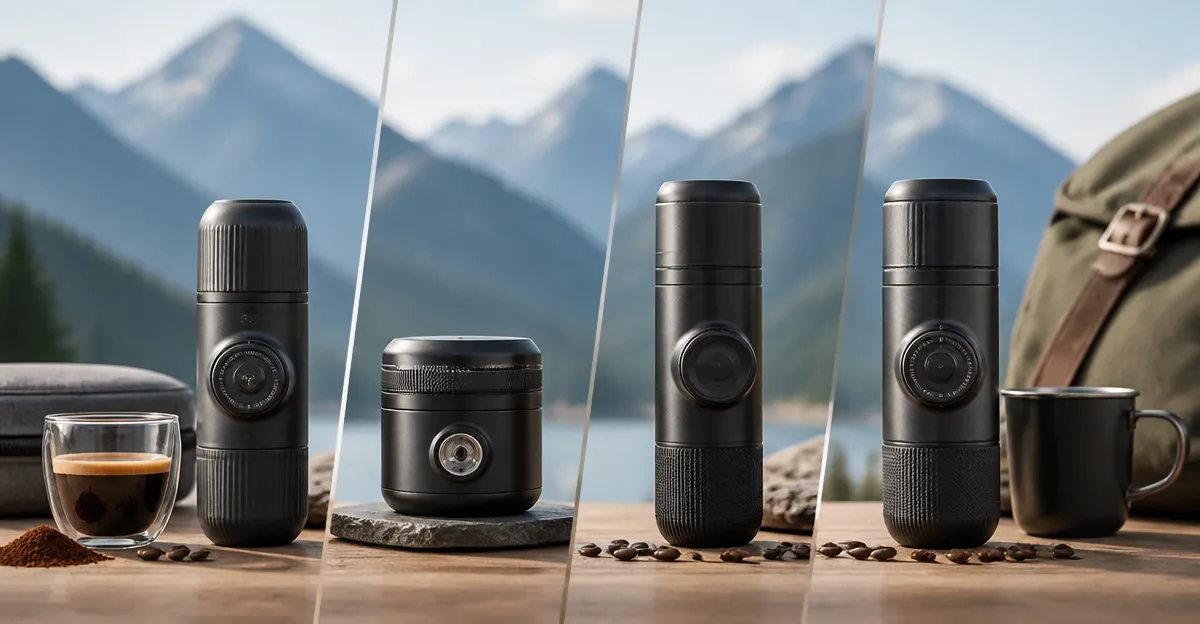
Portable espresso makers have become essential for travelers, outdoor enthusiasts, and coffee lovers who refuse to sacrifice quality while on the move. This article evaluates five Wacaco models – the Nanopresso Travel Espresso Maker, the Picopresso Portable Coffee Maker, the Minipresso GR, the Minipresso GR2, and the Nanopresso Portable Espresso Maker. By examining price, specifications, user sentiment, and real‑world performance, readers can identify which device best matches their constraints such as space, power, compatibility, or budget.
Individual Product Overviews
Nanopresso Travel Espresso Maker
Price: $79.90 • Rating: 4.6/5 (2,780 reviews) • Weight: 336 g • Length: 15.6 cm • Max pressure: 18 bar (261 psi). The unit ships with a protective case and a detachable 80 ml water tank. Reviewers praise its “crema‑filled” espresso, durability, and the ability to make 2‑4 mugs per day while camping. One user noted, “It makes the best espresso (it even has the crema on top!) for such a simple unit.”
Picopresso Portable Coffee Maker
Price: $129.90 • Rating: 4.5/5 (1,428 reviews) • Max pressure: 18 bar. Features a commercial‑size 18 g basket, naked portafilter, and all‑metal construction. Users highlight the “rich, syrupy, and balanced” espresso comparable to a lever machine. A reviewer wrote, “It produces coffee on a par with our very good Gaggia countertop machine.”
Minipresso GR
Price: $46.90 • Rating: 4.4/5 (6,230 reviews) • Max pressure: 18 bar. Compact design holds up to 50 ml of water. The unit is praised for “great little cup of espresso in minutes” and for being “small and portable, does not require batteries.”
Minipresso GR2
Price: $54.90 • Rating: 4.4/5 (6,230 reviews) • Max pressure: 18 bar. Water tank capacity increased to 80 ml, overall length 12.5 cm, weight 285 g. Introduces an adjustable basket (8‑12 g) and a double‑wall, cool‑touch shell made from 20 % wheat‑based polymer for eco‑friendliness.
Nanopresso Portable Espresso Maker (Grey)
Price: $64.90 • Rating: 4.4/5 (4,666 reviews) • Max pressure: 18 bar. Similar to the Travel version but without the bundled case. Users commend its “spectacular” espresso quality while traveling, though they note a learning curve for grind size and tamping.
Head‑to‑Head Comparison
Price and Value
- Most budget‑friendly: Minipresso GR at $46.90.
- Mid‑range options: Nanopresso Travel ($79.90) and Nanopresso Grey ($64.90).
- Premium offering: Picopresso at $129.90, justified by its full‑size basket and naked portafilter.
- GR2 adds modest price increase ($54.90) for larger tank and eco‑design.
Features and Specifications
| Nanopresso Travel | Picopresso | Minipresso GR | Minipresso GR2 | Nanopresso Grey |
|---|---|---|---|---|
| Weight 336 g; Length 15.6 cm; Water tank 80 ml | All‑metal; Naked portafilter; 18 g basket | Water tank 50 ml; Single‑shot basket | Water tank 80 ml; Adjustable 8‑12 g basket; Double‑wall shell | Similar to Travel but without case; 80 ml tank |
| 18 bar pressure; Manual pump | 18 bar pressure; Manual pump | 18 bar pressure; Manual pump | 18 bar pressure; Manual pump | 18 bar pressure; Manual pump |
| Included protective case | Full‑size commercial basket; Visual brewing | Integrated scoop; Simple operation | Eco‑friendly polymer shell | No accessories bundled |
Customer Ratings and Feedback
All models maintain ratings above 4.4, indicating strong overall satisfaction. The Travel Nanopresso leads with 4.6 stars, driven by comments such as “easy to clean and operate” and “perfect for camping.” Picopresso’s 4.5 rating stems from “rich crema” and “lever‑like extraction.” Minipresso GR and GR2 share 4.4 stars; users highlight “great for travel” and “lightweight.” The Grey Nanopresso also scores 4.4, with reviewers noting “spectacular espresso while traveling” but mentioning a “learning curve.”
Performance and Reliability
- Nanopresso Travel: Consistently reaches 18 bar; occasional gasket issues reported, but Wacaco now sells replacement gaskets for $1.
- Picopresso: Delivers “thick brown crema” and lever‑style pressure; some users report “dripping leak from piston” but consider it rare.
- Minipresso GR: Simple pump action; limited water capacity (50 ml) restricts shot size, yet reviewers find it “perfect for traveling.”
- Minipresso GR2: Larger tank and adjustable basket improve flexibility; eco‑friendly materials praised, no major reliability complaints.
- Nanopresso Grey: Similar performance to Travel; users mention “hand/arm workout” as a positive workout element.
Size, Power, Compatibility, and Price
All devices are manual, requiring no electricity or batteries, which makes them ideal for off‑grid use. In terms of size, the GR2 is the most compact at 12.5 cm length, while the Travel Nanopresso is slightly longer (15.6 cm) but includes a protective case. Compatibility varies: Picopresso’s naked portafilter offers visual brewing, while the Nanopresso models can accept Nespresso Original adapters (sold separately). The Minipresso line accepts any ground coffee, offering the greatest versatility.
Pros & Cons
Nanopresso Travel Espresso Maker
- Pros: High pressure (18 bar), portable case, 80 ml water tank, strong user loyalty.
- Cons: Gasket may wear; occasional pressure‑build failure; higher price than basic models.
Picopresso Portable Coffee Maker
- Pros: Commercial‑size basket, naked portafilter, premium metal build, lever‑like extraction.
- Cons: Highest price; more components increase cleaning complexity; small funnel can spill grounds.
Minipresso GR
- Pros: Lowest price, ultra‑lightweight, simple operation, works with any ground coffee.
- Cons: Small water tank limits shot volume; no case included; less robust than metal models.
Minipresso GR2
- Pros: Larger 80 ml tank, adjustable basket, eco‑friendly polymer shell, cool‑touch double wall.
- Cons: Slightly higher price than GR; still limited to manual pumping effort.
Nanopresso Portable Espresso Maker (Grey)
- Pros: Similar performance to Travel at a lower price; lightweight; no case needed for minimalists.
- Cons: No bundled accessories; users report need for precise grind and tamping.
Recommendations
Best for tight budgets: Minipresso GR provides acceptable espresso for under $50.
Best for compact travel: Minipresso GR2 offers the smallest footprint with an 80 ml tank and eco‑friendly design.
Best for café‑level crema: Picopresso justifies its premium price with a naked portafilter and commercial basket.
Best all‑rounder: Nanopresso Travel Espresso Maker balances price, pressure, and durability, especially when paired with the optional Barista Kit.
Best for minimalist travelers: Nanopresso Grey gives the core performance without extra case weight.
FAQ
- Do these machines require electricity? All five models operate manually; no batteries or external power are needed.
- Can I use pre‑ground coffee? Yes, but reviewers consistently note that freshly ground beans produce the best crema, especially for Picopresso and Nanopresso.
- How long does a single shot take? Typical preparation time ranges from 30 seconds to 2 minutes, depending on grind size and pump strokes.
- Are spare parts available? Replacement gaskets for the Nanopresso line are sold for $1 each; other accessories such as adapters and barista kits are sold separately.
- Is cleaning difficult? The Picopresso has the most components to rinse, while the Minipresso models are praised for “easy to clean” designs.
- Which model is most durable for rugged use? The all‑metal Picopresso and the polymer‑reinforced GR2 are highlighted for robust construction.
- Can I make a double shot? Yes, using the Nanopresso Barista Kit, Picopresso’s 18 g basket, or the double‑shot extension available for the Nanopresso series.
Conclusion
When evaluating portable espresso makers, the decisive factors are pressure capability, water capacity, build quality, and price. The Nanopresso Travel Espresso Maker emerges as the most versatile choice, delivering professional‑grade pressure in a compact, case‑protected package. For users prioritizing ultra‑low cost, the Minipresso GR suffices, while the Picopresso satisfies espresso connoisseurs seeking café‑level crema. Ultimately, each model fulfills a distinct niche, allowing consumers to select the device that aligns with their travel habits, budget, and performance expectations.
Products Mentioned in This Review
Frequently Asked Questions
What is the main difference between the Wacaco Nanopresso and the Minipresso GR?
The Nanopresso uses a higher‑pressure piston (up to 18 bar) and a larger water reservoir, while the Minipresso GR is lighter, manual‑pump only, and suited for ultra‑compact travel.
Can I use regular ground coffee with the Wacaco Picopresso?
Yes, the Picopresso accepts standard fine‑ground coffee and includes a built‑in grinder for beans if you prefer fresh grounds.
How portable is the Wacaco Minipresso GR2 compared to the original Minipresso?
The GR2 weighs about 340 g and folds into a compact shape, making it slightly bulkier than the original but still fits in a backpack or pocket.
Is an external power source required for any Wacaco portable espresso maker?
No, all Wacaco models are hand‑pump operated and do not need batteries or electricity.
Which Wacaco model offers the best value for a tight budget?
The Nanopresso Travel Espresso Maker, priced around $80 with a 4.6‑star rating, balances cost, performance, and durability, making it the most budget‑friendly option.