Introduction
This guide explains how to determine whether titanium cookware releases unwanted metals into food or water. It provides a systematic, science‑based approach that anyone can perform with minimal equipment. By following the steps, readers will gain confidence that their cookware is safe for daily use. The methods combine visual color‑change strips with rapid lead‑specific kits to deliver quick, reliable results.
What You’ll Need
- HOVIRAN Heavy Metals Water Test Strips – 125 strips, 8‑parameter kit, $10.06, 4.5★ (1,088 reviews)
- Merydi Heavy Metals Water Test Strips – 100 strips, 8‑parameter kit, $10.39, 4.3★ (208 reviews)
- Detekt Lead Drinking Water Test – dedicated lead kit, $27.99, 4.3★ (35 reviews)
- DIPSTIK Heavy Metals Water Test Strips – 100 strips, 9‑parameter kit, $11.89, 4.2★ (1,650 reviews)
- AssuTest Lead Paint Test Swabs – 30 swabs, $4.99, 4.1★ (266 reviews)
- Clean stainless steel pot, non‑reactive glass measuring cup, distilled water, and a timer.
Step 1: Create a Controlled Leaching Sample
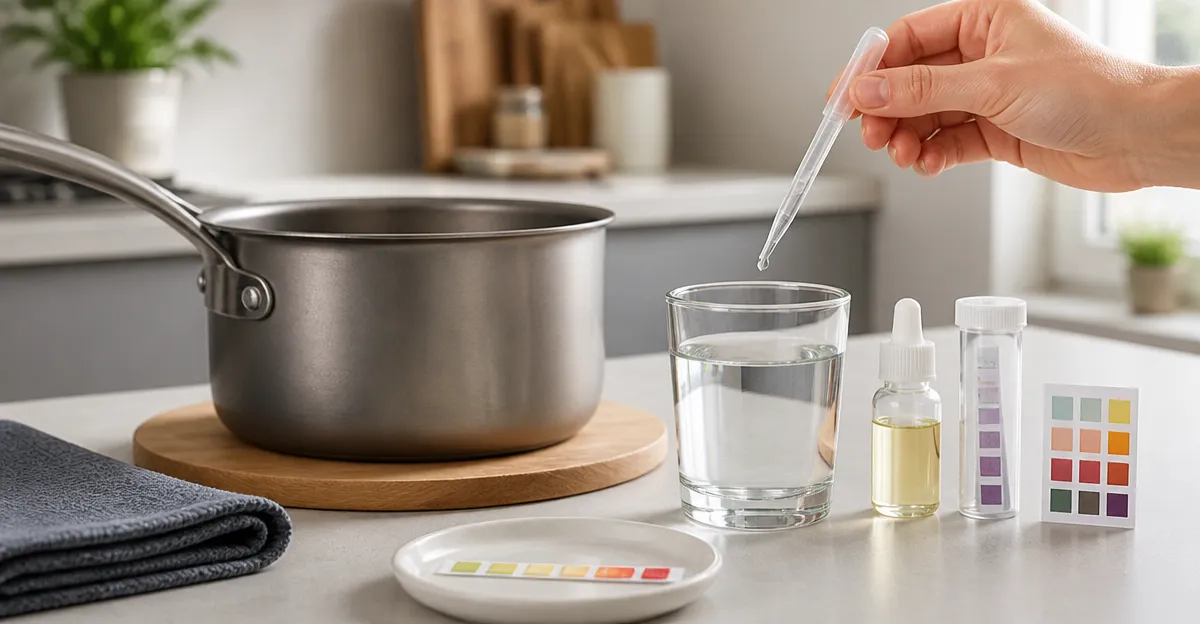
Begin by filling a clean pot with exactly one liter of distilled water. Distilled water eliminates background metal ions that could skew results. Heat the water to a gentle boil, then lower the temperature to a steady simmer for ten minutes. During this period, the titanium surface is exposed to hot water, mimicking typical cooking conditions. After the simmer, allow the water to cool to room temperature before testing.
Step 2: Select an Appropriate Test Strip Kit
For a comprehensive assessment, choose a strip kit that detects the metals most likely to leach from cookware, such as iron, copper, and cadmium. The HOVIRAN Heavy Metals Water Test Strips cover eight parameters, including iron, copper, lead, and cadmium, making them ideal for a broad screening. Their 125‑strip supply ensures repeatability for multiple cookware pieces. Alternatively, the DIPSTIK Heavy Metals Water Test Strips provide a nine‑parameter panel that adds zinc to the mix, which can be useful if the cookware has a zinc alloy coating.
Why these strips are useful: they deliver results in under a minute via a simple dip‑and‑read method, and the color chart printed on the container allows immediate visual comparison without additional equipment.
Step 3: Perform the Water Test
- Remove a single strip from the chosen kit, ensuring the pad is not damaged.
- Dip the strip fully into the cooled water sample for the time specified (usually 1–2 seconds).
- Withdraw the strip and wait the recommended development time (typically 30 seconds).
- Compare the resulting color to the chart on the strip container, noting the concentration range for each metal.
Record the observed levels in a notebook. If any metal exceeds the “acceptable” range defined by local health agencies (for example, lead above 15 ppb), further investigation is warranted.
Step 4: Conduct a Dedicated Lead Test
Even though the multi‑parameter strips include lead, a dedicated lead test provides higher sensitivity and a clear pass/fail result. The Detekt Lead Drinking Water Test detects lead concentrations as low as 1 ppb within five minutes. Use a fresh portion of the same water sample, add two drops to the test vial, and wait for the line development. A single line indicates the presence of lead; two lines confirm its absence.
This step is valuable because lead is the most toxic heavy metal commonly found in older plumbing, and its health impacts are severe, especially for children and pregnant individuals.
Step 5: Verify Surface Contamination (Optional)
If you suspect surface‑bound lead or other heavy metals on the cookware’s exterior, the AssuTest Lead Paint Test Swabs can be employed. Moisten a swab with water, rub a small area of the cookware’s interior or exterior, and observe the color change within 30 seconds. A mustard‑yellow baseline indicates no lead, while red/purple/pink signifies contamination.
Although these swabs are designed for paint, their chemical reagent reacts with lead particles on any surface, providing a quick visual cue. Use this method only for surface checks; it does not replace water‑based leaching tests.
Tips & Pro Tips
- Always use distilled water for the leaching test to avoid false positives from municipal water.
- Perform the test in a well‑lit area; consistent lighting improves color‑chart accuracy.
- Store test strips in a dry, airtight container to prevent moisture degradation.
- For repeated testing, label each water sample with the date, cookware model, and test kit used.
- If a strip indicates borderline concentrations, repeat the test with a fresh strip to confirm consistency.
Troubleshooting
- Strip colors appear faded or unclear. Ensure the strips have not been exposed to humidity; replace any compromised strips.
- Lead test shows a faint line. Wait the full 10‑minute development period; if the line persists, consider sending a sample to a certified laboratory.
- No color change on swabs. Verify that the swab was adequately moistened (2–8 seconds) before rubbing.
Conclusion
By following these five steps, one can confidently assess whether titanium cookware releases harmful metals during typical cooking. The combination of broad‑spectrum water test strips, a dedicated lead kit, and optional surface swabs offers a layered safety net. Regular testing—especially after new cookware purchase or after prolonged use—helps maintain a healthy kitchen environment. Remember that at‑home kits provide screening, not definitive certification; persistent concerns should be addressed with professional laboratory analysis.
Products Mentioned in This Guide
Frequently Asked Questions
How can I test titanium cookware for metal leaching at home?
Use heavy‑metal water test strips and a lead‑specific kit to sample water that has boiled in the cookware and check for color changes.
What equipment do I need to test titanium pots for leached metals?
You need heavy‑metal test strips (e.g., HOVIRAN, Merydi, DIPSTIK) and a dedicated lead test kit like Detekt.
Are the test strips safe and accurate for detecting leached metals?
Yes, the 8‑parameter strips detect common metals and provide quick visual results, though a lead‑specific kit offers higher sensitivity for lead.
How often should I test my titanium cookware?
Test periodically, such as after the first few uses or if the cookware shows wear, to ensure continued safety.
What does a positive color change on the test strip indicate?
A color change signals the presence of the corresponding metal above the strip’s detection limit, meaning the cookware may be leaching that metal.