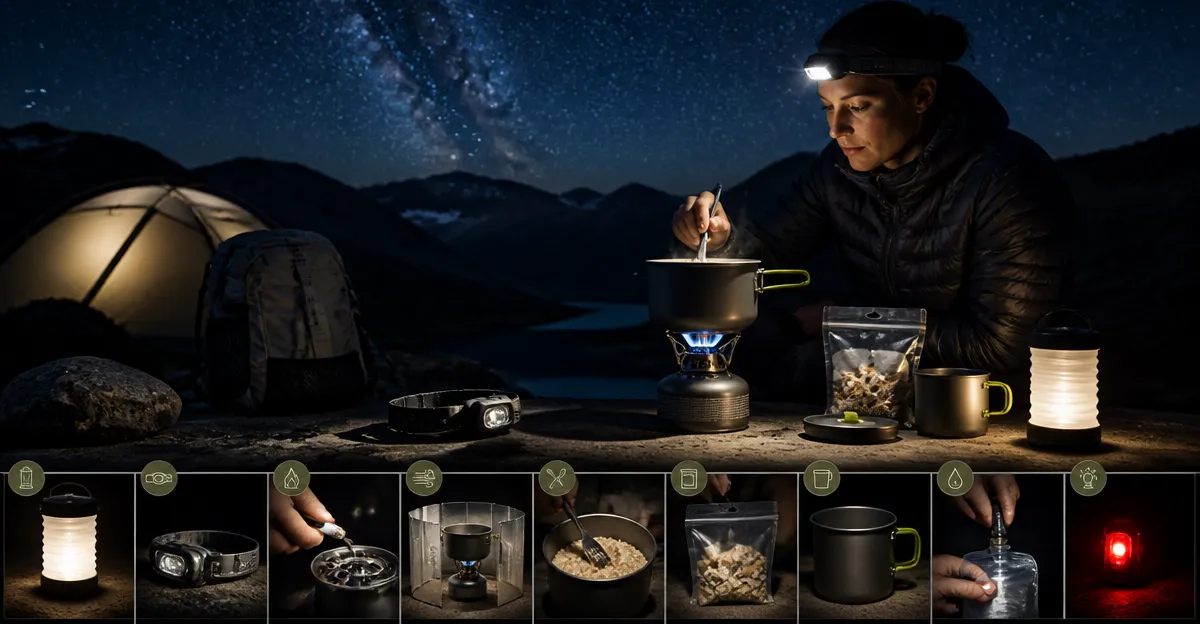
How to Master Nighttime Ultralight Cooking: 10 Low‑Light Hacks for Fast, Safe Backpacking Meals
Introduction
Backpackers who venture out after dark face a unique set of challenges: limited visibility, colder temperatures, and the need to conserve energy. This guide teaches ten low‑light hacks that enable fast, safe meals while keeping pack weight to a minimum. Readers will learn how to select the right ultralight stove, organize compact cookware, protect the flame from wind, and manage fuel efficiently—all without sacrificing nutrition or safety. By applying these techniques, one can enjoy a hot cup of coffee or a nourishing stew even when the sun has set, allowing for flexible itinerary planning and increased morale on long treks.
What You’ll Need
- Ultralight canister stove (e.g., MSR PocketRocket 2)
- Compact cookware set (e.g., Odoland Camping Cookware Set)
- Backup butane stove for emergencies (e.g., Gas One Butane Stove)
- Wind‑shield or natural windbreak material
- Light‑weight fuel canisters (isobutane‑propane or 8 oz butane)
- Headlamp with adjustable beam
- Safety gloves and a small first‑aid kit
Step‑by‑Step Instructions
1. Prepare Your Cooking Zone Before Dark
Choose a flat, stable surface away from dry brush. Clear debris and arrange a natural windbreak using rocks or a portable windscreen. This reduces fuel consumption and prevents flame loss. A well‑prepared zone also minimizes the risk of accidental burns when visibility is low.
2. Deploy an Ultralight Canister Stove
Unfold the MSR PocketRocket 2. Its 2.6 oz weight and 2×2×3 in compact size make it ideal for night‑time packs. The stove requires no priming, pre‑heating, or pumping, allowing immediate ignition. Connect a high‑performance isobutane‑propane canister (not included) and twist the valve fully open. The stove boils one liter of water in 3.5 minutes, providing rapid heat for meals or hydration.
- Why this stove? Its lightweight design, quick‑setup mechanism, and reliable flame control outperform bulkier two‑burner systems when weight and speed matter.
- Key specs: Price $49.95, rating 4.8/5 (4,298 reviews), 3‑year limited warranty.
3. Use Collapsible Pot Supports for Stability
Deploy the serrated pot‑support arms on the PocketRocket 2. These supports grip a wide range of pot diameters, ensuring the pot remains stable even on uneven ground. Place the 16 oz stainless steel cup from the Odoland Camping Cookware Set on the supports, then add water or ingredients.
- Why the Odoland set? It includes two non‑stick aluminum pots, a silicone‑protected cup, and foldable handles, all fitting within the PocketRocket’s compact footprint.
- Key specs: Price $28.99, rating 4.6/5 (5,408 reviews), anti‑heat handles, mesh carry bag.
4. Light the Stove with a Reliable Ignition Source
If the stove model includes a piezo igniter, press the button; otherwise, use a wind‑proof lighter. The PocketRocket 2’s built‑in igniter eliminates the need for matches, reducing the chance of wind‑related misfires. In windy conditions, shield the flame with a small metal windscreen or a folded piece of aluminum foil.
5. Adjust Flame for Efficient Boiling
Turn the control valve to achieve a rolling boil within 2‑3 minutes for 1 L of water. For simmering dehydrated meals, lower the flame to a gentle simmer; the stove’s precise adjustment prevents over‑cooking and conserves fuel. Monitor the flame through the headlamp’s focused beam to avoid overheating the pot.
6. Optimize Fuel Usage with a Backup Stove
Carry the Gas One Butane Stove as a secondary heat source. Its 7,650 BTU output and automatic piezo ignition provide rapid heat when the primary canister is depleted. The safety‑eject feature prevents accidental over‑pressurization, a valuable safeguard during night operations.
- Why this backup? It uses standard 8 oz butane canisters, which are widely available and inexpensive, ensuring you are never stranded without heat.
- Key specs: Price $24.99, rating 4.6/5 (2,853 reviews), CSA approved, quiet operation.
7. Employ a Titanium Micro‑Stove for Emergency Situations
In extreme weight‑critical scenarios, the BRS 3000T Titanium Stove offers a 25 g solution. Nest the stove inside a 110 g canister, then place a 750 ml titanium pot directly on the flame. It boils 1 L of water in under 3 minutes, making it an excellent car‑emergency or ultra‑light pack addition.
- Why this micro‑stove? Its negligible weight and compact size allow it to fit inside a pocket or vest, providing heat when every gram counts.
- Key specs: Price $16.89, rating 4.5/5 (3,928 reviews), 2,700 W output, wind‑proof design.
8. Use a Multi‑Purpose Windshield
Create a windbreak by arranging rocks, a compact aluminum windscreen, or even the stove’s own protective case. Shielding the flame reduces fuel consumption by up to 30 %. When using the Coleman Classic Butane Stove, the built‑in baffle further protects the burner, making it suitable for exposed ridgelines.
- Why the Coleman? Its large base and porcelain‑coated grate provide stability for larger pots, useful when cooking for a group at night.
- Key specs: Price $39.99, rating 4.6/5 (2,018 reviews), 7,650 BTU, Instastart ignition.
9. Cook in Stages to Minimize Light Exposure
Prepare ingredients in advance during daylight (pre‑soak dehydrated meals, chop vegetables). At night, add water, bring to a boil, then remove from heat and let residual heat finish cooking. This technique reduces the time the flame is exposed, conserving fuel and limiting the need for bright illumination.
10. Pack and Store Equipment Safely
After cooking, allow the stove and pot to cool for 2‑3 minutes before folding. Store the PocketRocket 2 in its protective case, the Odoland cookware in its mesh bag, and the backup stoves in their individual cases. Keeping equipment organized prevents loss and ensures rapid deployment on subsequent nights.
Tips & Pro Tips
- Always test your stove and fuel connection before the first night on the trail.
- Use a headlamp with a red filter to preserve night vision while still seeing the flame.
- Carry a small spare fuel canister; a 100 g isobutane canister adds less than 2 oz to pack weight.
- When cooking with the BRS 3000T, position the pot centrally to avoid uneven heating.
- Consider a lightweight titanium mug for drinking; it matches the micro‑stove’s ultralight philosophy.
Troubleshooting
| Problem | Possible Cause | Solution |
|---|---|---|
| Flame sputters or goes out | Wind or partially seated canister | Re‑seat the canister, use a windscreen, and ensure the valve is fully open. |
| Slow boil time | Low fuel pressure or clogged nozzle | Turn off valve, detach canister, check nozzle for debris, then re‑attach. |
| Stove does not ignite | Piezo igniter malfunction | Use a reliable lighter as a backup; verify battery (if electronic) or replace igniter if possible. |
Conclusion
Mastering nighttime ultralight cooking requires careful preparation, the right tools, and a few smart hacks. By following the ten steps outlined above—preparing a stable zone, deploying an MSR PocketRocket 2, leveraging compact Odoland cookware, and employing backup stoves such as Gas One, Coleman, or the BRS 3000T—backpackers can enjoy hot meals after dark without sacrificing weight or safety. Implement the tips, troubleshoot common issues, and you will gain confidence to cook efficiently under any low‑light condition.
Products Mentioned in This Guide
Frequently Asked Questions
What is the best ultralight stove for nighttime cooking?
The MSR PocketRocket 2 is a top choice because it’s lightweight, reliable in low‑light conditions, and ignites quickly with a simple click.
How can I protect my stove flame from wind when cooking after dark?
Use a compact windscreen or set the stove behind natural windbreaks like rocks or a tarp to maintain a steady flame.
Which low‑light cooking techniques help reduce fuel use?
Cook with a simmer plate, pre‑measure ingredients, and boil only the water needed for your meal to maximize efficiency.
How should I organize my cookware for fast setup in the dark?
Nest pots and lids together, attach the fuel canister to the stove with a carabiner, and keep a single spork ready for quick access.
Is it safe to use a backup butane stove for night cooking?
Yes, provided you use it in a well‑ventilated area, keep it away from flammable gear, and follow the manufacturer’s safety instructions.