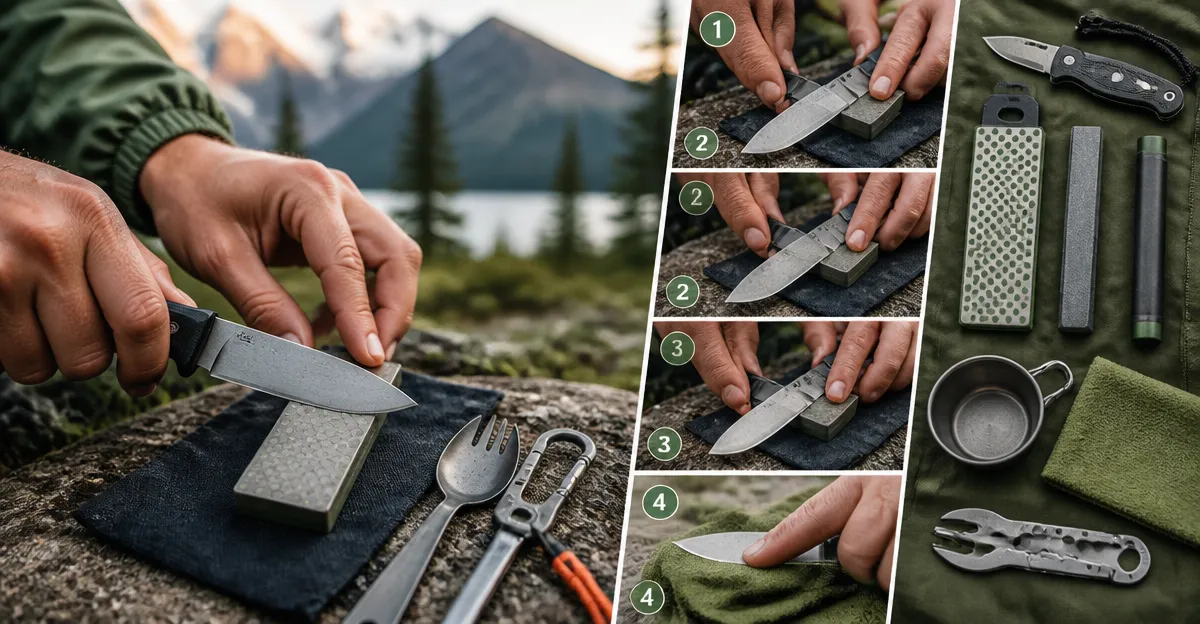
How to Field‑Sharpen Ultralight Knives and Utensils: A Step‑by‑Step Guide for Backpacking and Camping
Introduction
Backpackers and campers frequently encounter dull blades after several days of use, and a sharp edge can be the difference between efficient meal preparation and frustrating delays. This guide will teach the reader how to restore a razor‑sharp edge to ultralight knives and utensils using portable tools that fit easily into a daypack. The reader will learn to assess blade condition, select the appropriate sharpening stage, and maintain the tools for long‑term reliability. By following these instructions, one can ensure safe cutting performance while minimizing the weight and bulk of sharpening equipment.
The methods described are applicable to stainless steel, carbon steel, and high‑carbon alloy blades commonly found in ultralight kitchen sets. The guide also highlights affordable, high‑rating products that streamline each step without compromising durability. Even without purchasing any of the recommended tools, the principles remain useful for any field sharpening scenario.
What You’ll Need
The following items constitute a lightweight yet comprehensive sharpening kit. Each product is linked to its Amazon page for convenience.
- AccuSharp Knife Sharpener – ergonomic handheld sharpener for rapid edge restoration.
- Sharpal 191H Knife Sharpener – suction‑base system with three sharpening stages.
- Intelitopia Whetstone Set – dual‑grit stones and accessories for coarse to fine sharpening.
- HOTEC 4‑in‑1 Knife Sharpener – compact multi‑stage manual sharpener.
- Sharp Pebble Adjustable Knife Sharpener – precision angle‑adjustable system for final honing.
In addition to the tools, bring a small bowl of water, a clean cloth, and a protective glove if desired. All items together weigh less than 500 grams, making them suitable for ultralight packs.
Step 1: Assess Blade Condition
Begin by inspecting the blade under natural light or a portable lantern. Look for visible nicks, rolled edges, or uneven bevels that indicate the amount of material to be removed. If the edge feels merely dull rather than damaged, a fine honing stage will suffice; otherwise, a coarse stone is required to reshape the bevel.
For quick field assessment, the AccuSharp Knife Sharpener can be run lightly across the blade to feel the difference between a dull and a sharpened edge. Its diamond‑honed tungsten carbide blades provide an immediate tactile cue, allowing the user to decide whether a full sharpening cycle is necessary. The AccuSharp costs $11.99, holds a 4.7‑star rating from 28,356 reviews, and fits comfortably in the palm of either hand.
Step 2: Secure the Sharpener and Prepare the Workspace
A stable base prevents accidental slips that could damage the blade or cause injury. Place the sharpening device on a flat surface such as a campsite table or a sturdy rock. If the surface is uneven, lay a non‑slip silicone mat underneath.
The Sharpal 191H Knife Sharpener features an enhanced suction base that adheres firmly to smooth countertops, and it also works on solid rocks when the suction is engaged. Its three‑stage system—tungsten carbide for edge setting, ceramic for precision honing, and a dedicated blade for scissors—covers the majority of field scenarios. Priced at $16.99 with a 4.4‑star rating from 50,781 reviews, this tool offers both stability and versatility without adding excessive weight.
Step 3: Coarse Sharpening with a Whetstone
If the blade exhibits chips or a rolled edge, begin with the coarse side of a whetstone (400‑1000 grit). Submerge the stone in water for at least one minute, then place it on a non‑slip bamboo base. Hold the blade at the recommended angle—typically 15° for ultralight kitchen knives—and draw the edge across the stone in a sweeping motion, maintaining consistent pressure.
The Intelitopia Whetstone Set includes both 400/1000 and 3000/8000 grit stones, a flattening stone, an angle guide, and a leather strop. At $29.99 and a 4.5‑star rating, it provides a complete solution for field sharpening, allowing the user to progress from coarse reshaping to fine polishing without swapping tools. The included angle guide ensures the correct bevel is maintained, which is critical for ultralight knives that rely on thin edges for efficient cutting.
Step 4: Fine Honing and Edge Polishing
After establishing a proper bevel, transition to a finer grit (3000‑8000) to remove the burr and produce a razor‑sharp edge. Use the same water‑lubricated technique, but reduce the number of strokes to avoid excessive material loss. Finish the process by drawing the blade lightly across the leather strop to align the microscopic teeth.
For users who prefer a guided angle without a stone, the Sharp Pebble Adjustable Knife Sharpener offers selectable angles from 12° to 24°. This precision tool is especially useful when the traveler lacks a stable water source for whetstones. Priced at $39.99 with a 4.5‑star rating from 4,141 reviews, it delivers consistent results on straight‑edge blades and eliminates guesswork in the field.
Step 5: Maintenance, Storage, and Quick Touch‑Ups
Once the blade is sharpened, wipe it clean with a damp cloth to remove metal filings, then dry thoroughly to prevent corrosion. Store the sharpening kit in a waterproof pouch to protect the stones and carbide blades from moisture.
The HOTEC 4‑in‑1 Knife Sharpener serves as an excellent compact touch‑up device for daily campsite use. Its ceramic stone maintains a fine edge, while the diamond rods provide rapid edge setting for minor dullness. At $9.99 and a 4.2‑star rating from 881 reviews, it is an economical addition that fits easily into any ultralight pack.
Tips & Pro Tips
Always sharpen away from your body and keep the blade angled downward to prevent accidental cuts. Use a protective glove on the hand that holds the knife if you are uncomfortable with the motion.
When working at high altitude, water boils faster, which can affect stone lubrication. In such conditions, use a small amount of mineral oil instead of water to maintain consistent slurry on the whetstone.
For serrated knives, the AccuSharp’s reversible diamond blades can be employed on the serrated side, but avoid excessive passes to preserve the tooth profile.
Periodically flatten your whetstones with the included flattening stone to ensure an even grinding surface; an uneven stone can create inconsistent angles and damage the blade.
Troubleshooting
Problem: The blade feels dull after using a coarse stone.
Solution: Verify that the stone is fully saturated with water; a dry stone will not create an effective slurry, resulting in poor material removal. Re‑wet the stone for at least 30 seconds and repeat the strokes.
Problem: Metal filings accumulate on the countertop.
\nSolution: Place a disposable sheet of paper or a silicone mat beneath the sharpener to catch debris. Clean the area with a damp cloth after each sharpening session to prevent the filings from scattering.
Conclusion
Field sharpening ultralight knives and utensils is a manageable task when the proper technique and tools are employed. By assessing blade condition, securing a stable work surface, progressing through coarse and fine stages, and performing diligent maintenance, one can maintain optimal cutting performance throughout any backpacking or camping adventure.
The recommended products—AccuSharp, Sharpal 191H, Intelitopia Whetstone Set, HOTEC 4‑in‑1, and Sharp Pebble Adjustable—each address a specific stage of the sharpening process, offering reliable results without excessive weight. Mastery of these steps empowers the outdoor enthusiast to rely on sharp tools rather than improvisation, enhancing safety and efficiency in the backcountry.
Products Mentioned in This Guide
Frequently Asked Questions
What portable tools are best for sharpening ultralight knives in the field?
A small ceramic honing rod, a compact leather strop, and a lightweight diamond or waterstone (3‑6 in) are ideal for daypacks.
How can I tell if my ultralight blade needs sharpening while camping?
If the blade no longer slices paper cleanly or struggles to cut rope, the edge is dull and requires honing.
What is the recommended sharpening sequence for stainless‑steel ultralight knives?
Start with a coarse grit (200‑400) to set the bevel, move to medium (800‑1000) for edge refinement, and finish with a fine grit (3000‑6000) for polish.
Can I sharpen a carbon‑steel camping spoon without a stone?
Yes, a ceramic sharpening rod or a rough rock with a flat surface can restore edge, followed by a leather strop to remove burrs.
How do I maintain my field‑sharpening tools to ensure long‑term reliability?
Keep stones dry, wipe rods and strops after use, and store them in a sealed pouch to prevent moisture and corrosion.