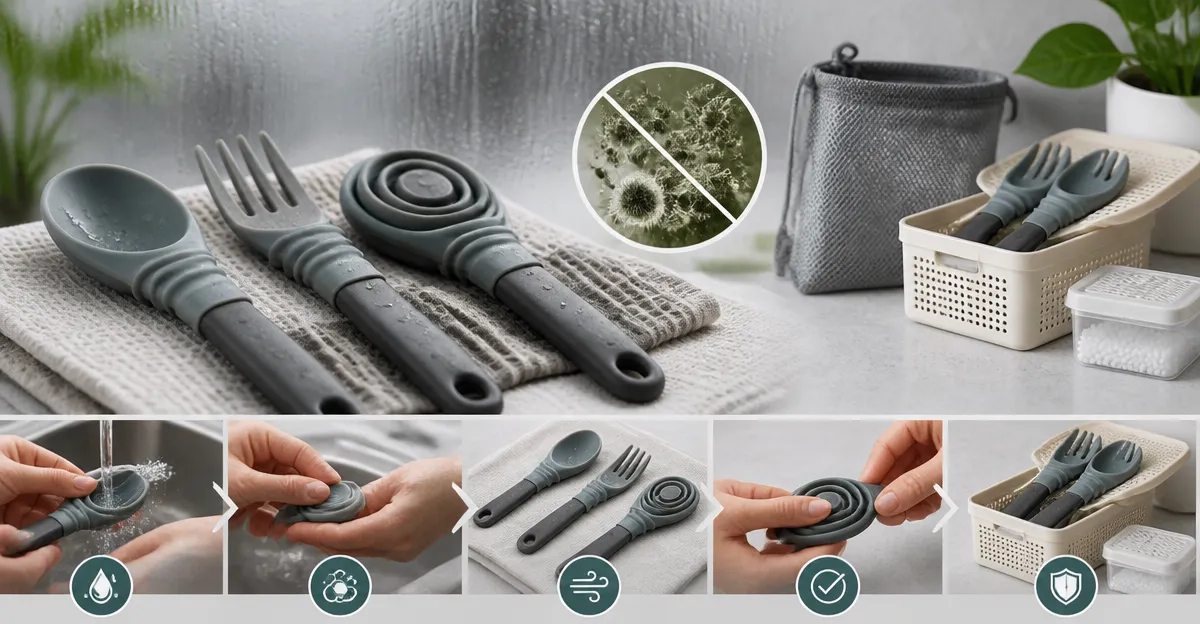
How to Prevent Mold on Collapsible Utensils in Humid Conditions: Simple Cleaning, Drying & Storage Tips
Introduction
In humid climates, moisture can accumulate inside collapsible utensil sets, creating an environment where mold thrives. This guide explains how to clean, dry, and store these utensils so that they remain hygienic and ready for use. The reader will learn practical techniques that rely on everyday materials as well as specialized tools that enhance effectiveness. By following the steps, one can extend the lifespan of the utensils and protect personal health.
Although the advice applies to any portable cutlery, the examples reference specific products that demonstrate best‑in‑class design. The recommendations are optional; the core methods remain useful without purchase. The tone remains professional and authoritative, ensuring that intermediate users can implement the procedures with confidence.
What You'll Need
- Warm water and mild dish soap
- Soft-bristled brush or non‑abrasive sponge
- Microfiber towel or air‑dry rack
- Silicone‑grip travel case (optional)
- Secure‑closure storage container (optional)
Optional products are linked in the steps below; each link points to an Amazon listing that includes price and rating information.
Step 1: Thorough Cleaning After Each Use
The first line of defense against mold is to remove food residues that provide nutrients for fungal growth. Rinse the utensils under warm water to dislodge loose particles, then apply a few drops of mild dish soap. Use a soft‑bristled brush to scrub the interior of forks, spoons, knives, and any detachable components. Pay special attention to joints and hinges where moisture can become trapped.
For users who desire a compact cleaning solution, the ZOKU Pocket Utensil Set offers a case made from BPA‑free polypropylene that includes a silicone grip to limit finger contact with the metal. The set is dishwasher safe on the top rack, which simplifies thorough cleaning. It is priced at $15.99 and holds a rating of 4.8/5.0 from 1,988 reviews, indicating reliable performance.
Why this product is useful in this step is that the silicone grip reduces the need to handle wet metal directly, thereby minimizing the transfer of water into the case. The leak‑proof design also prevents soap residue from pooling inside the pouch, which could otherwise promote mold growth.
After scrubbing, place the utensils in the sink and allow the running water to rinse away all soap. Verify that no food particles remain in the crevices of the chopsticks or the knife edge.
Step 2: Complete Drying Before Storage
Even a small amount of residual moisture can trigger mold within hours in a humid environment. The most effective method is to air‑dry the utensils on a clean microfiber towel for at least fifteen minutes. Position the items so that water can drain away from joints; a tilted rack works well.
If rapid drying is required, the Quatish Travel Utensils Set includes a waterproof aluminum‑foil lined case that prevents moisture from re‑entering the utensils after they have been dried. The set costs $7.49 and enjoys a rating of 4.8/5.0 from 6,746 reviews, reflecting high customer satisfaction.
The case’s elastic band secures the cutlery tightly, eliminating rattling and reducing the chance that condensation will form inside the pouch. By storing the dry utensils in this case, one creates a barrier against ambient humidity while maintaining portability.
Allow the case to remain open for a few minutes after placing the utensils inside; this permits any lingering vapor to escape before sealing.
Step 3: Secure Storage in a Moisture‑Resistant Environment
After drying, the next priority is to keep the utensils in an environment that does not re‑introduce moisture. A sealed container with a moisture‑absorbing packet is ideal for long‑term storage. For travelers who prefer a built‑in solution, the TININA Travel Utensils Set features a unique buckle design that snaps the case tightly, preventing accidental opening.
This set is priced at $6.99 and carries a rating of 4.8/5.0 from 2,476 reviews. The reinforced case is made from high‑strength material, which resists deformation and keeps the interior dry even when placed in a backpack near a wet jacket.
The buckle mechanism ensures that the case remains closed during transport, reducing the risk of humidity entering the utensil compartment. Additionally, the case’s thicker walls act as an insulating layer, slowing the transfer of external moisture.
For extra protection, place a small silica‑gel packet inside the case. Replace the packet every three months to maintain optimal absorption capacity.
Step 4: Periodic Maintenance and Inspection
Even with diligent cleaning and storage, periodic inspection is essential to detect early signs of mold. Once a month, remove the utensils from their case and examine each piece under good lighting. Look for discoloration, a fuzzy texture, or a musty odor, all of which indicate fungal growth.
If any sign of mold appears, soak the affected utensil in a solution of one part white vinegar to four parts water for ten minutes. Rinse thoroughly and dry completely before returning to storage. The vinegar solution acts as a natural antifungal agent without damaging stainless steel.
For users who appreciate an eco‑friendly option, the YDYTOP Wheat Straw Travel Utensils are made from natural wheat straw and food‑grade polypropylene. Priced at $6.99 with a rating of 4.8/5.0 from 5,643 reviews, these utensils are lightweight and visually appealing. Their case is designed with a separate lid that can be used to air‑dry the utensils while they are stored, providing an additional ventilation pathway.
The wheat‑straw material is resistant to staining and does not retain moisture as readily as some plastics, making it a suitable choice for humid climates. Regularly rotating between sets can also reduce the time any single set spends in a moist environment.
Tips & Pro Tips
- Always dry the interior of the case itself before sealing; a damp case can re‑wet the utensils.
- Store utensils in a location with good airflow, such as an open cupboard rather than a sealed drawer.
- Consider using a small, battery‑operated dehumidifier in a pantry where travel utensils are kept for extended periods.
- When traveling, keep the case in a zip‑lock bag for an extra moisture barrier.
- Avoid exposing stainless‑steel utensils to acidic foods for prolonged periods, as this can accelerate corrosion and create micro‑environments for mold.
Troubleshooting
Problem: Persistent musty odor despite regular cleaning.
Solution: Perform a deep clean with a baking‑soda paste (baking soda mixed with water) applied to each piece, let sit for fifteen minutes, then rinse and dry thoroughly. Replace the case if it shows signs of wear.
Problem: Visible mold spots after storage.
Solution: Discard the affected utensil if the material is porous (e.g., wheat straw) and replace it with a new set. For stainless steel, follow the vinegar soak method and ensure complete drying before resealing.
Conclusion
Preventing mold on collapsible utensils in humid conditions requires a disciplined approach to cleaning, drying, and storage. By removing food residues, ensuring thorough drying, using moisture‑resistant cases, and conducting regular inspections, one can maintain hygiene and extend the functional life of the utensils. The recommended products illustrate how thoughtful design can simplify each step, yet the core principles remain effective without any purchase. Implement these practices and enjoy reliable, mold‑free portable cutlery on every outing.
Products Mentioned in This Guide
Frequently Asked Questions
How often should I clean collapsible utensils in a humid climate?
Clean them after each use or at least once a week to remove moisture and food residue that can foster mold.
What is the best method to dry collapsible utensils quickly?
Rinse with warm water, shake out excess, then pat dry with a microfiber towel or place them upright on an air‑dry rack until completely dry.
Can I use vinegar or bleach to prevent mold on these utensils?
A diluted white‑vinegar rinse (1:4) is safe and effective; avoid bleach unless the utensil material is explicitly bleach‑compatible.
Is a silicone‑grip travel case necessary for mold prevention?
It helps by providing a sealed, moisture‑resistant environment, but proper drying and storage in any airtight container works as well.
How should I store collapsible utensils to keep them mold‑free?
Store them completely dry in a secure‑closure case or a ventilated container, away from direct humidity and heat sources.