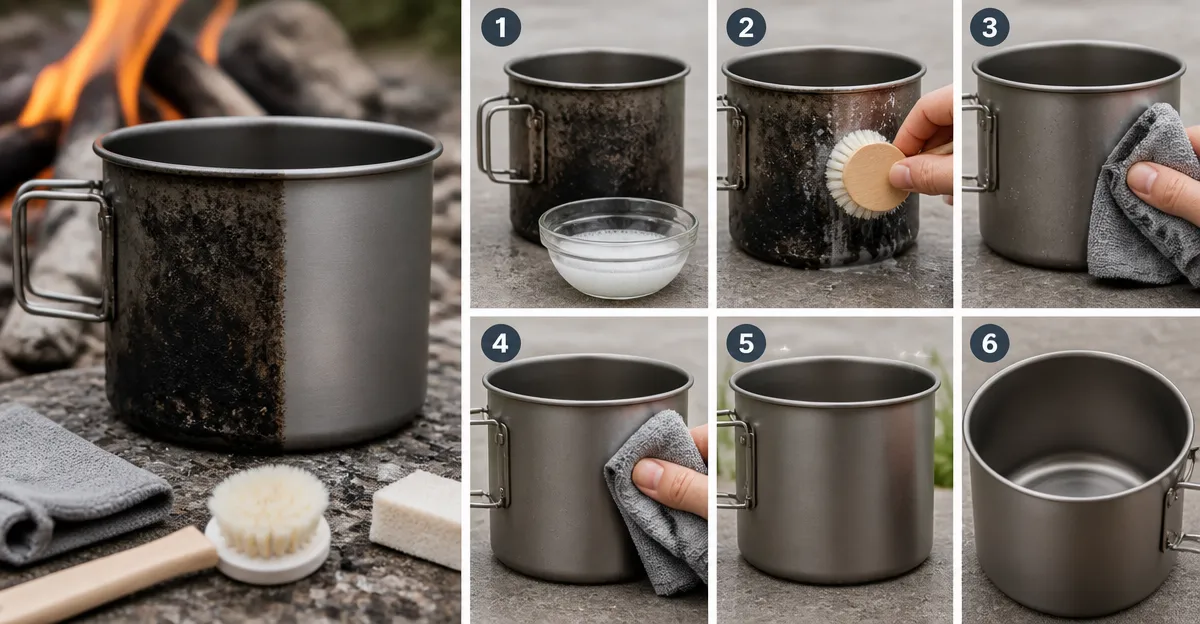
How to Remove Soot from Titanium Pots After a Wood Fire — Fast, Safe & Scratch‑Free
Introduction
Anyone who enjoys cooking over a wood fire knows that soot buildup can tarnish even the most durable titanium cookware. This guide explains how to restore a titanium pot to its original shine without damaging the surface or compromising its lightweight strength. Readers will learn a systematic, low‑risk approach that works for ultralight backpacking pots and larger kitchen saucepans alike. By following these steps, one can keep a titanium pot ready for the next adventure or family dinner.
What You'll Need
- Soft non‑abrasive sponge or microfiber cloth
- Gentle dish soap (pH‑neutral)
- White vinegar
- Baking soda
- Plastic or silicone scrub brush
- Clean water source (filtered if possible)
- Optional: TOAKS Titanium 750ml Pot – $26.00, 4.9/5 rating (3,174 reviews)
- Optional: SSHIYEEY Titanium Saucepan 1.5 Qt – $45.99, 4.2/5 rating (60 reviews)
Step‑by‑Step Instructions
Step 1 – Allow the Pot to Cool Completely
After extinguishing the fire, set the pot aside in a well‑ventilated area until it reaches room temperature. Rapid temperature changes can cause micro‑warping in titanium, especially for ultralight models such as the TOAKS Titanium 750ml Pot. Waiting at least 30 minutes eliminates the risk of burns and ensures that soot adheres only to the surface, not to softened metal. This pause also prevents steam from spreading soot particles onto nearby gear.
Step 2 – Remove Loose Debris
Using a soft brush or a dry microfiber cloth, gently sweep away any charred fragments and loose ash. The brush should be plastic or silicone to avoid scratching the pure titanium finish. For larger saucepans such as the SSHIYEEY Titanium Saucepan 1.5 Qt, a wider brush covers more area without excessive pressure. This preliminary step reduces the amount of abrasive action needed later in the process.
Step 3 – Prepare a Vinegar Soak
Fill the pot with equal parts warm water and white vinegar (1:1 ratio). Vinegar’s mild acidity loosens carbon deposits without reacting with titanium, which is chemically inert. Let the mixture sit for 10‑15 minutes; the solution penetrates the soot, softening it for easier removal. For a 750 ml pot, this requires roughly 350 ml of each component, fitting comfortably within the pot’s 760 ml rim capacity.
Step 4 – Gentle Scrubbing with a Non‑Abrasive Sponge
After soaking, dip a soft sponge in the vinegar solution and rub the interior using circular motions. Because titanium is exceptionally hard, a gentle touch is sufficient; excessive force can create microscopic scratches that affect heat distribution. The sponge’s texture removes the majority of soot while preserving the pot’s polished surface. Rinse with clean water to wash away loosened particles.
Step 5 – Tackling Stubborn Soot with a Baking Soda Paste
If residue remains, create a paste of baking soda and a few drops of water. Baking soda acts as a mild alkaline abrasive that lifts carbon without etching titanium. Apply the paste to the affected spots, let it sit for 5 minutes, then use a silicone scrub brush to work it in gently. Rinse thoroughly; any remaining paste will dissolve in water, leaving no gritty residue.
Step 6 – Final Rinse and Dry
Fill the pot with fresh water, swirl to ensure all cleaning agents are removed, and pour out the water. Dry the interior with a clean microfiber cloth, turning the pot upside down to allow air circulation. Proper drying prevents water spots and eliminates the risk of rust, even though titanium itself does not rust. Store the pot with its mesh sack (included with the TOAKS model) to protect the surface during transport.
Step 7 – Restore Natural Shine
For a glossy finish, wipe the interior with a small amount of food‑grade mineral oil using a soft cloth. The oil creates a protective barrier that repels future soot adhesion and makes cleaning easier on subsequent trips. Allow the oil to sit for a minute, then buff until no streaks remain. This final polish highlights the titanium’s characteristic silvery hue and signals that the pot is ready for its next fire‑cooked meal.
Tips & Pro Tips
- Never use steel wool or metal scouring pads; they can embed micro‑scratches that become hot spots during cooking.
- If cleaning in the field, substitute vinegar with lemon juice; the citric acid provides comparable soot‑breaking power.
- For high‑altitude camps, use a collapsible water container to ensure you have enough clean water for rinsing.
- When using the bail‑handle version of the TOAKS pot (TOAKS Titanium 750ml Pot with Bail Handle), detach the bail before soaking to avoid trapping moisture inside the handle cavity.
- Store the pot with the lid slightly ajar to allow any residual moisture to escape, preserving the interior finish.
Troubleshooting
Problem: Soot remains after the vinegar soak.
Solution: Increase soak time to 30 minutes and repeat the gentle scrub. The extended exposure allows the acid to penetrate deeper carbon layers.
Problem: Light scratches appear after using a brush.
Solution: Switch to a pure‑silicone pad and apply less pressure. Titanium’s hardness means scratches are usually surface‑level and can be polished out with the mineral‑oil step.
Conclusion
By following this systematic approach, one can remove soot from titanium cookware quickly, safely, and without compromising the pot’s lightweight integrity. The combination of vinegar, baking soda, and non‑abrasive tools respects the material’s unique properties while delivering a spotless interior. Regular maintenance extends the life of ultralight gear such as the TOAKS Titanium 750ml Pot and larger options like the SSHIYEEY Titanium Saucepan 1.5 Qt. With these practices, every fire‑cooked meal will be followed by a pot that looks as good as new, ready for the next adventure.
Products Mentioned in This Guide
Frequently Asked Questions
What is the safest way to remove soot from a titanium pot without scratching it?
Use a soft non‑abrasive sponge or microfiber cloth with warm, pH‑neutral dish soap and gently wipe the surface.
Can I use steel wool or abrasive cleaners on titanium cookware?
No—abrasive pads can scratch the titanium coating and weaken its lightweight strength.
How does white vinegar help clean soot from titanium pots?
White vinegar’s mild acidity loosens carbon deposits, making soot easier to wipe away without harsh chemicals.
Is a baking soda paste effective for stubborn soot stains?
Yes; mix baking soda with a little water to form a paste, apply with a plastic scrub brush, then rinse thoroughly.
How often should I clean my titanium pot after using a wood fire?
Clean the pot after each fire to prevent buildup and keep the surface ready for the next cooking session.