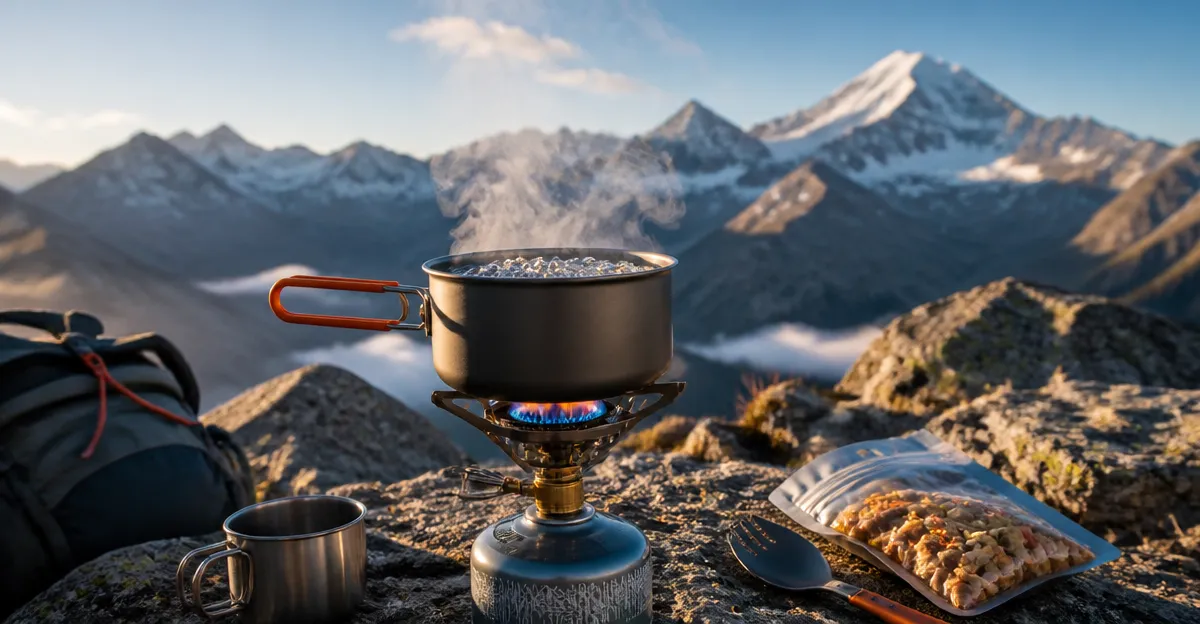
One-Pot Boiling Times for High-Altitude Backpacking: The Complete Guide to Faster, Safer Camp Meals
Introduction
Backpacking at high altitude presents a unique set of challenges for cooking. The thinner air reduces boiling temperature, which in turn lengthens the time required to bring water to a boil. This guide explains the physics behind altitude boil times, outlines strategies to reduce cooking time, and recommends five proven stove systems that excel in thin‑air conditions. Readers will leave with a clear understanding of how to plan meals, select equipment, and apply best‑practice techniques to ensure hot, safe food even above 3,000 m.
Background and Context
At sea level water boils at 100 °C (212 °F). For every 300 m increase in elevation, the boiling point drops roughly 1 °C. By 3,000 m the boiling temperature is near 90 °C, which can increase boil time by 30 % or more. The reduced temperature also affects microbial kill rates, making safety considerations essential. In addition, wind, fuel type, and stove design all influence performance. Understanding these variables allows backpackers to compensate with proper gear and technique.
Key Concepts and Strategies for Faster Boiling
Three core concepts drive faster boil times at altitude:
- Heat Exchange Efficiency: Stoves that recycle heat from the exhaust (heat exchangers) raise water temperature more quickly.
- Fuel Pressure and Flow: Consistent fuel delivery maintains a stable flame, reducing the time spent at sub‑optimal heat output.
- Wind Protection: A windscreen or shield prevents heat loss and improves fuel economy.
Applying these concepts, backpackers can adopt the following strategies:
- Pre‑heat the pot with a small amount of water before the main boil.
- Use a pot with a tight‑fitting lid to trap heat.
- Position the stove in a sheltered spot and add a lightweight windscreen.
- Choose a stove with an integrated heat‑exchange base or a high‑output burner.
Product Recommendations
The following stoves have been selected because they address the three core concepts while remaining lightweight enough for long treks.
Fire-Maple Fixed Star 1 Stove System
The Fire-Maple Fixed Star 1 Stove System combines a 1 L hard‑anodized aluminum pot with a built‑in piezo igniter and a proprietary heat‑exchange base that claims up to 30 % faster boil times. At 18 oz the unit is compact enough to nest inside the pot, and its stainless‑steel handle and neoprene cover provide durability for repeated use. The system is compatible with most canisters (except Coleman) and has earned a 4.5‑star rating from 2,558 reviewers.
MSR PocketRocket 2
The MSR PocketRocket 2 is an ultralight (2.6 oz) canister stove that boils 1 L of water in 3.5 minutes at sea level. Its simple, priming‑free design makes it reliable in windy conditions, while the collapsible serrated pot‑supports accommodate a range of cookware. With a 4.8‑star rating from 4,277 users, it is a benchmark for reliability and speed.
BRS‑3000T Titanium Stove
The BRS‑3000T Titanium Stove weighs only 25 g and delivers 2,700 W of power, boiling 1 L of water in just under 3 minutes. Its titanium construction makes it ideal for ultra‑light backpackers, and the flame adjustment knob offers precise control. Reviewers give it a 4.6‑star rating from 3,910 comments, noting its value at $16.89.
Fire-Maple Greenpeak 1
The Fire-Maple Greenpeak 1 is a 85 g ultralight canister stove featuring a built‑in piezo igniter, micro‑windshield, and EN417 valve. Its compact dimensions (2.1 × 2.8 in) allow it to fold into a pocket, and its fuel‑efficient design maximizes burn time. The stove holds a 4.6‑star rating from 648 reviewers and is priced at $19.95.
Jetboil Flash
The Jetboil Flash integrates a 1 L FluxRing cooking cup, auto‑ignition, and an insulated cozy. It boils 16 oz of water in roughly 2 minutes, thanks to its efficient heat‑recirculation system. At $125.35 it is the premium option, earning a 4.8‑star rating from 542 users.
Comparison and Selection Guide
| Feature | Fire-Maple Fixed Star 1 | MSR PocketRocket 2 | BRS‑3000T | Fire-Maple Greenpeak 1 | Jetboil Flash |
|---|---|---|---|---|---|
| Weight (oz) | 18 | 2.6 | 0.9 | 3 | 4.4 (incl. fuel canister) |
| Boil Time (1 L, sea level) | ~3.0 min (claimed 30% faster) | 3.5 min | 2.9 min | ~3.2 min | 2.0 min |
| Heat‑Exchange | Integrated HX base | None | None | Micro‑shield | FluxRing |
| Fuel Compatibility | Most canisters (except Coleman) | Isobutane‑propane canisters | Standard canisters | Standard canisters | JetPower canister (sold separately) |
| Price (USD) | 49.95 | 49.95 | 16.89 | 19.95 | 125.35 |
| Average Rating | 4.5/5 | 4.8/5 | 4.6/5 | 4.6/5 | 4.8/5 |
When selecting a stove, consider three primary factors: altitude range, pack weight budget, and cooking style. For ultralight hikers who prioritize weight above all, the BRS‑3000T or Greenpeak 1 are optimal. For those who need rapid boil times and integrated cookware, the Fixed Star 1 and Jetboil Flash excel. The PocketRocket 2 offers a balanced compromise of weight, reliability, and price.
Best Practices & Tips for High‑Altitude Boiling
- Pre‑heat the fuel canister: In cold environments, fuel pressure drops. Keep the canister close to your body for a few minutes before lighting.
- Use a lid with a vent: Trapping steam speeds boiling, while a small vent prevents pressure buildup.
- Employ a windscreen: A lightweight windscreen (e.g., a folded soda can) can improve efficiency by up to 20 %.
- Match pot size to stove output: Oversized pots dilute heat; a 1 L pot is ideal for most solo meals.
- Adjust flame for simmering: Many stoves, such as the Fixed Star 1, include a regulator knob that lets you lower the flame for sauces or oatmeal without wasting fuel.
- Altitude‑specific fuel mixes: Some brands offer high‑altitude blends with higher propane content, which burn hotter.
- Safety first: Always set the stove on a stable, heat‑resistant surface and keep flammable materials at a safe distance.
Frequently Asked Questions
- 1. Why does water take longer to boil at altitude?
- Because atmospheric pressure is lower, water’s boiling point drops, meaning it reaches a lower temperature before turning to steam. The lower temperature requires more time to transfer the same amount of heat.
- 2. Can I use regular propane canisters at high altitude?
- Standard isobutane‑propane mixes work, but performance improves with blends that contain a higher propane ratio. Check the manufacturer’s altitude rating.
- 3. Is a windscreen worth the extra weight?
- Yes. A simple windscreen can cut boil time by 15‑20 % in breezy conditions, which often outweighs the few grams added.
- 4. How much extra fuel should I carry for high‑altitude cooking?
- Plan for approximately 30 % more fuel than sea‑level estimates. For a 3‑day trek, a 230 g canister is a safe baseline.
- 5. Are integrated pot‑stove systems more efficient?
- Integrated systems, such as the Fixed Star 1, use a heat‑exchange base that recycles exhaust heat, typically delivering faster boils and lower fuel consumption.
- 6. What is the safest way to ignite a stove in windy conditions?
- Use a piezo igniter (found on the Fixed Star 1, Greenpeak 1, and Jetboil Flash) or a wind‑protected match. Avoid open flames that can be blown out.
- 7. How do I clean a titanium stove after use?
- Allow the stove to cool, then wipe the burner with a soft cloth. For stubborn residue, soak the burner in warm, soapy water for a few minutes before rinsing.
Conclusion
High‑altitude backpacking demands careful attention to boil times, fuel efficiency, and safety. By understanding the physics of reduced pressure, selecting a stove that matches one’s weight and performance priorities, and applying proven cooking techniques, hikers can enjoy hot meals and safe water without sacrificing precious pack space. Whether you choose the ultra‑light BRS‑3000T, the versatile Fixed Star 1, or the premium Jetboil Flash, the principles outlined here will help you boil faster and cook smarter on the roof of the world.
Products Featured in This Guide
Fire-Maple Fixed Star 1 Stove System
Price: $49.95 | Rating: 4.5/5 (2,558 reviews)
Featured for its integrated heat‑exchange base, 30 % faster boil claim, and all‑in‑one pot design that reduces pack volume.
MSR PocketRocket 2
Price: $49.95 | Rating: 4.8/5 (4,277 reviews)
Selected for its ultralight weight, quick 3.5‑minute boil, and reliable priming‑free operation.
BRS-3000T Titanium Stove
Price: $16.89 | Rating: 4.6/5 (3,910 reviews)
Highlighted for its 25 g weight, 2,700 W output, and exceptional value for ultralight enthusiasts.
Fire-Maple Greenpeak 1
Price: $19.95 | Rating: 4.6/5 (648 reviews)
Chosen for its 85 g ultralight build, built‑in piezo igniter, and micro‑windshield that excels in windy alpine zones.
Jetboil Flash
Price: $125.35 | Rating: 4.8/5 (542 reviews)
Featured for its integrated FluxRing heat‑recirculation system, auto‑ignition, and record‑breaking 2‑minute boil time.