Introduction
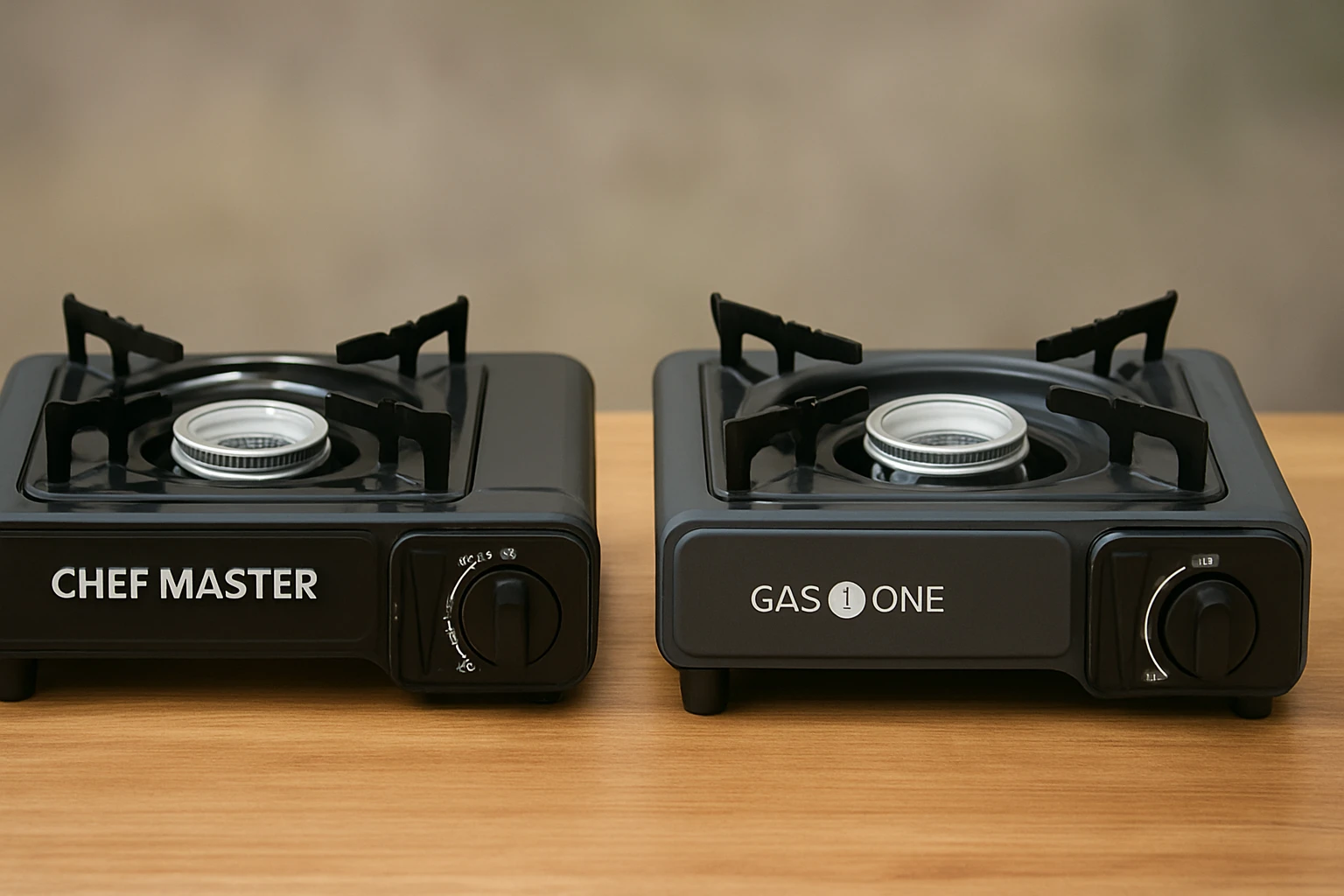
When selecting a portable camp stove, outdoor enthusiasts must balance heat output, fuel flexibility, weight, and safety. Two popular options on Amazon are the Chef Master Portable Butane Camp Stove and the Gas One Dual Fuel Camping Stove. Both claim high performance for a modest price, yet they differ in fuel compatibility, ignition technology, and protective features. This article evaluates each model on objective criteria, helping readers decide which stove aligns with their camping style.
Individual Product Overviews
Chef Master Portable Butane Camp Stove
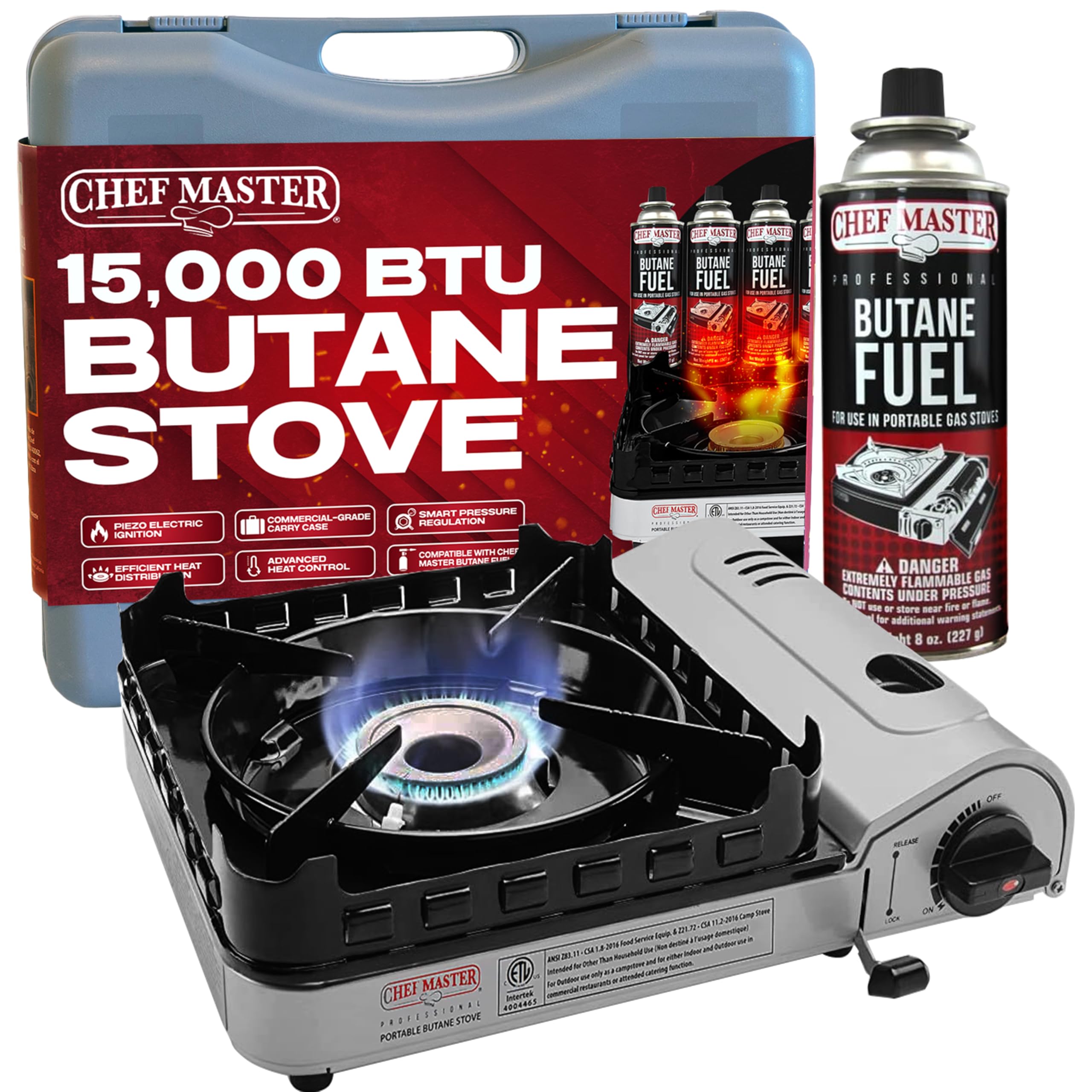
The Chef Master stove delivers a robust 15,000 BTU output from a single butane cartridge. Its piezo electric ignition lights the burner with a simple turn of a knob, eliminating the need for matches. The unit incorporates a double wind‑guard and an in‑line regulator with a pressure‑sensing shut‑off system, enhancing stability in windy conditions and preventing flashbacks. Weighing only a few pounds, the stove ships in a hard‑shell carrying case for easy transport. Priced at $64.05, it holds a 4.6‑star rating from 2,119 Amazon reviewers.
Gas One Dual Fuel Camping Stove
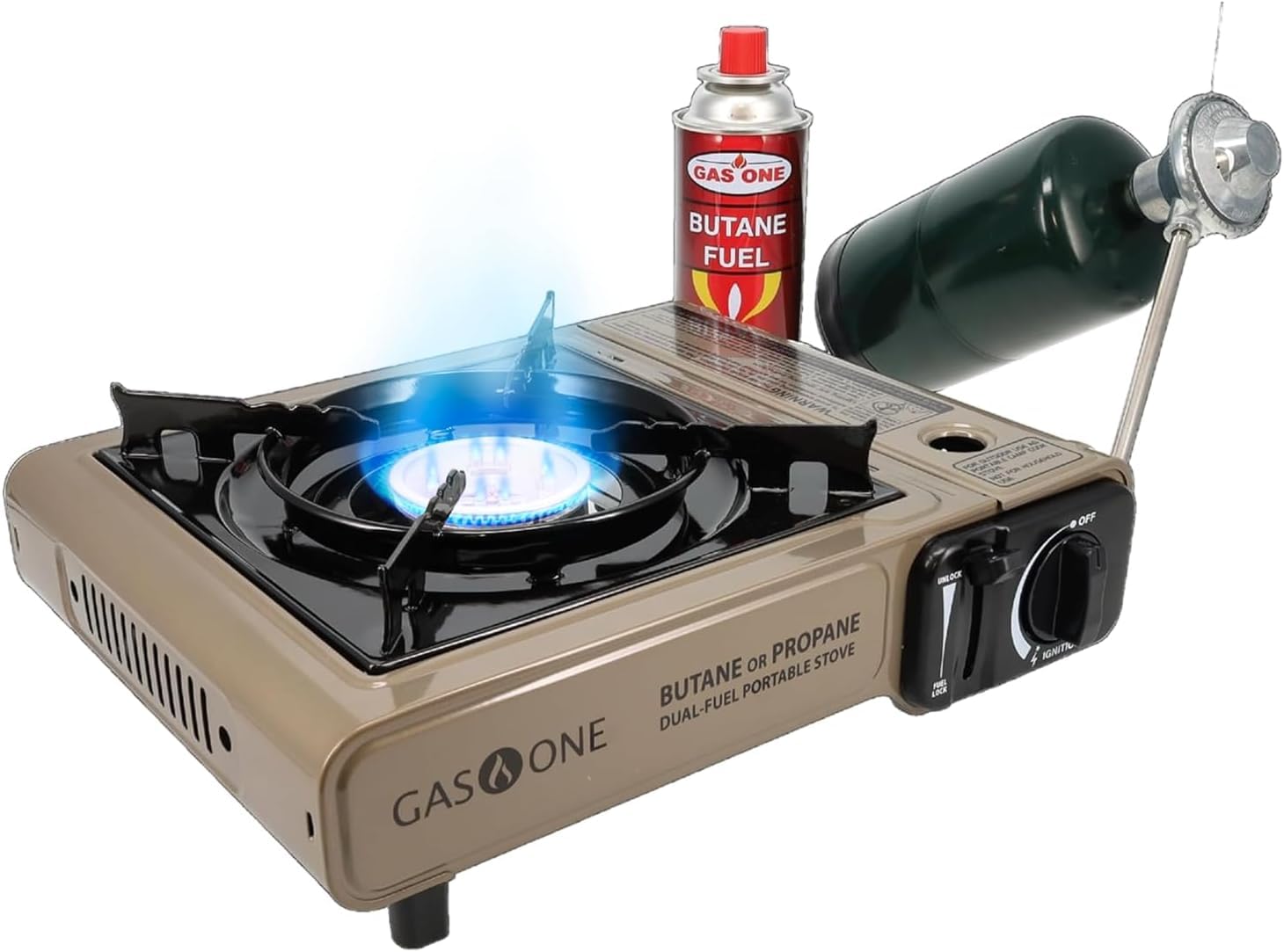
The Gas One GS‑3400P offers dual‑fuel capability, accepting either an 8‑oz butane cartridge or a 16.4‑oz propane cylinder (fuel not included). It features an automatic piezo electric ignition, an adjustable heat dial, and a built‑in pressure sensor that ejects the cartridge if irregular pressure is detected. Safety is reinforced by a cartridge ejection system and a gas‑flow cut‑off mechanism. At $29.99, it is considerably cheaper than the Chef Master model and shares the same 4.6‑star rating, this time from a larger pool of 14,867 reviewers.
Head‑to‑Head Comparison
Price and Value
- Chef Master: $64.05 – higher upfront cost, but includes a rugged hard‑shell case and a dedicated 15,000 BTU burner.
- Gas One: $29.99 – budget‑friendly price; however, users must purchase fuel cartridges separately.
When evaluating value, the Chef Master’s higher price is justified by its stronger heat output and integrated wind protection, whereas the Gas One provides flexibility for those who already own propane or butane supplies.
Features and Specifications
| Feature | Chef Master | Gas One |
|---|---|---|
| Fuel Type | Butane cartridge (fuel not included) | Dual fuel – butane (8 oz) or propane (16.4 oz) (fuel not included) |
| Heat Output | 15,000 BTU | Not specified (manufacturer emphasizes adjustable heat dial) |
| Ignition | Piezo electric (manual turn‑knob) | Automatic piezo electric |
| Wind Protection | Double wind‑guard + optional carry‑case shield | Standard wind guard (no double system) |
| Safety Systems | In‑line regulator, pressure‑sensing shut‑off | Pressure sensor, cartridge ejection, gas‑flow cut‑off |
| Portability | Lightweight, hard‑shell case | Compact, includes carrying case |
Customer Ratings and Feedback
Both stoves share a 4.6‑star average rating, indicating strong overall satisfaction. The Chef Master’s 2,119 reviews highlight praise for its rapid boil time and reliable wind protection. The Gas One’s 14,867 reviews frequently mention the convenience of switching between butane and propane, as well as appreciation for the safety cartridge‑ejection feature. The larger review base for the Gas One suggests broader market exposure, yet the Chef Master’s niche strengths remain evident.
Performance and Reliability
With a documented 15,000 BTU output, the Chef Master excels at high‑heat tasks such as searing and boiling large volumes of water quickly. Its double wind‑guard mitigates flame loss in breezy environments, a common challenge for backpackers. The Gas One, while lacking a disclosed BTU figure, compensates with fuel versatility and a robust safety system that automatically ejects a cartridge under abnormal pressure. Users seeking consistent high heat may prefer Chef Master, whereas those prioritizing fuel flexibility and safety redundancy may lean toward Gas One.
Best Use Cases
- Chef Master: Ideal for high‑altitude treks, winter camping, or situations where rapid heat is essential (e.g., boiling water for dehydrated meals).
- Gas One: Suited for mixed‑fuel campsites, emergency preparedness kits, and casual weekend outings where fuel availability varies.
Pros & Cons
Chef Master Portable Butane Camp Stove
- Pros:
- 15,000 BTU high heat output
- Double wind‑guard for stable flame
- Piezo ignition eliminates matches
- Integrated safety regulator
- Rugged hard‑shell case for transport
- Cons:
- Higher price point
- Only compatible with butane (no propane option)
Gas One Dual Fuel Camping Stove
- Pros:
- Dual‑fuel flexibility (butane or propane)
- Automatic piezo ignition
- Cartridge ejection safety system
- Lower cost
- Adjustable heat dial
- Cons:
- Heat output not specified
- No double wind‑guard
- Fuel not included; users must purchase cartridges
Recommendations
For campers who require rapid, high‑heat cooking in windy or high‑altitude environments, the Chef Master Portable Butane Camp Stove offers the most reliable performance, albeit at a higher cost. Conversely, hikers and emergency‑kit builders who value fuel versatility and budget‑friendly pricing should consider the Gas One Dual Fuel Camping Stove. Both models deliver solid safety features, but the choice hinges on heat intensity versus fuel flexibility.
FAQ
- Can the Chef Master stove be used with propane? No, it is designed exclusively for butane cartridges.
- Does the Gas One stove require a separate regulator for propane? Yes, the package includes a propane converter regulator.
- Which stove ignites faster? Both employ piezo electric ignition; the Chef Master requires a manual turn of the knob, while the Gas One ignites automatically with a button press.
- Are the safety shut‑off systems comparable? Both models feature pressure‑sensing mechanisms, but the Gas One adds a cartridge‑ejection system that physically removes the fuel source under abnormal pressure.
- Which stove is lighter? Exact weight specifications are not listed, but both are described as lightweight and include carrying cases for transport.
- Is the wind‑guard on the Chef Master removable? The double wind‑guard is built into the burner head; an additional portable shield can be positioned beside the stove for extra protection.
- Can I use the Gas One stove in a backpacking scenario? Yes, its compact design and dual‑fuel capability make it suitable for backpacking, provided the user carries the appropriate fuel cartridge.
Conclusion
Both the Chef Master and Gas One stoves meet the core needs of outdoor cooking: portability, safety, and reliable ignition. The Chef Master distinguishes itself with a high 15,000 BTU output and superior wind protection, making it the optimal choice for demanding conditions. The Gas One excels in fuel versatility and affordability, appealing to budget‑conscious campers and emergency‑preparedness enthusiasts. Ultimately, the decision should reflect the user’s primary environment and fuel preferences.
Products Mentioned in This Review
Frequently Asked Questions
What type of fuel does the Chef Master Portable Butane Camp Stove use?
It runs exclusively on standard butane cartridges.
How does the Gas One Dual Fuel Camping Stove differ in fuel compatibility?
It accepts both butane canisters and liquid fuel canisters, offering more flexibility.
What ignition method is used on the Chef Master stove?
A piezo electric ignition ignites the burner with a turn of a knob, no matches needed.
Which stove has a wind‑guard and safety shut‑off system?
The Chef Master features a double wind‑guard and an in‑line regulator with pressure‑sensing shut‑off to prevent flashbacks.
Are both stoves lightweight enough for backpacking?
Yes, both models weigh only a few ounces, making them suitable for backpacking trips.