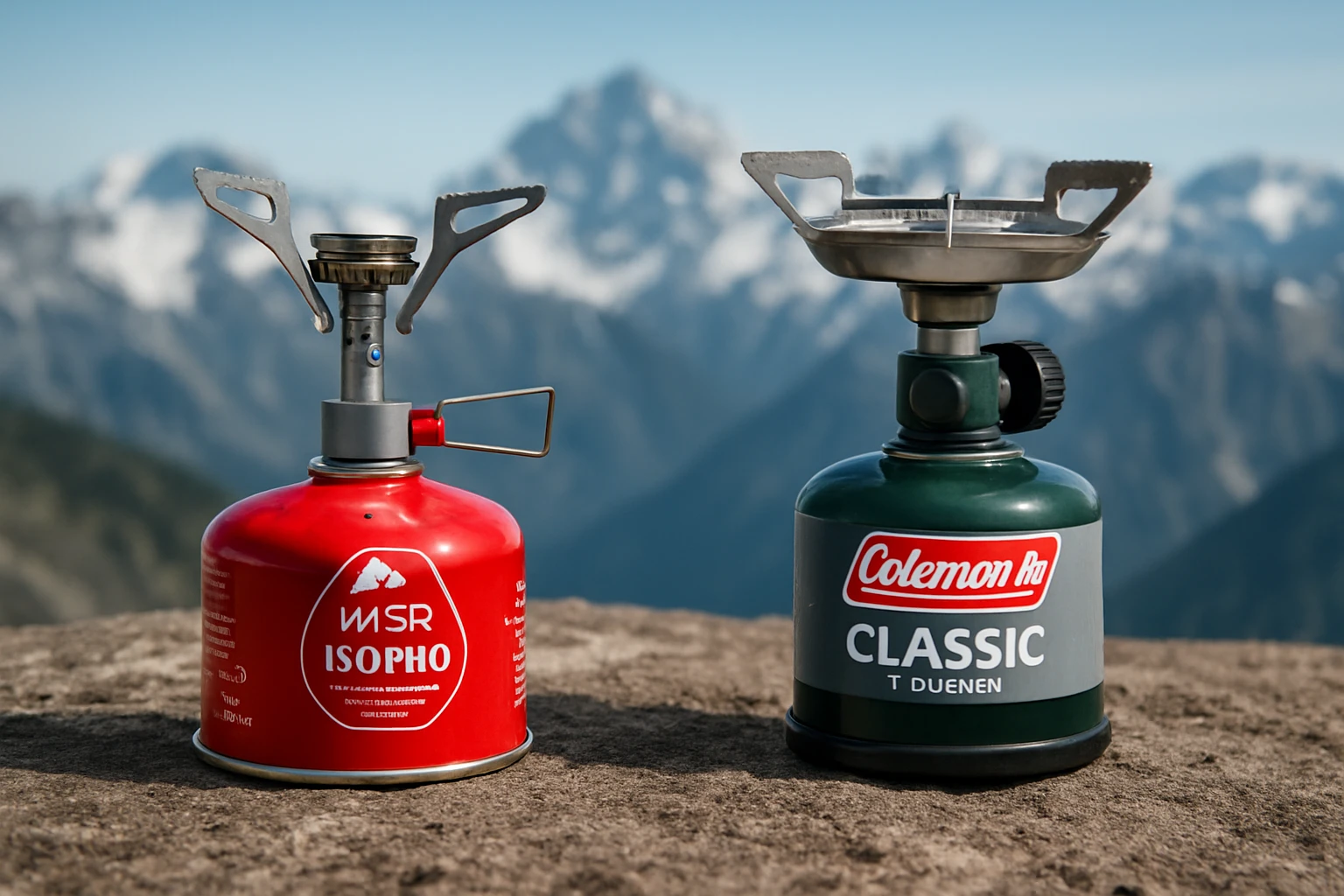
Introduction
High‑altitude mountaineering demands cooking equipment that is both lightweight and reliable in extreme wind and cold. This article reviews two compact stoves that are frequently cited by alpinists and backpackers: the MSR PocketRocket 2 and the Coleman Classic 1‑Burner. Readers will learn which model delivers the best balance of weight, wind resistance, and fuel efficiency for summit cooking.
Overview
The table below summarizes the most important specifications of each stove. All data are taken directly from the manufacturers and Amazon listings.
- MSR PocketRocket 2 – Weight: 2.6 oz (4.2 oz with case); Boil time: 3.5 min per litre; Fuel: isobutane‑propane canister; Price: $49.95; Rating: 4.8/5 (4,233 reviews).
- Coleman Classic 1‑Burner – Weight: 6.7 oz; Boil time: 3.25 min per litre; Fuel: standard 230‑gram canister; Price: $24.69; Rating: 4.5/5 (1,551 reviews).
In‑Depth Analysis
MSR PocketRocket 2
Design & Build Quality – The PocketRocket 2 is constructed from stainless‑steel and aluminum alloy, providing a corrosion‑resistant shell that survives repeated temperature cycles. Its folding design collapses to a 2 × 2 × 3 inch package, making it one of the smallest canister stoves on the market. The included hard case adds protection without significantly increasing bulk.
Features & Performance – The stove delivers a flame that can be adjusted from a gentle simmer to a rolling boil, allowing precise temperature control for gourmet meals at altitude. Boiling one litre of water in 3.5 minutes is comparable to larger canister models, yet the PocketRocket 2 uses only 0.08 kg of fuel for that task. The serrated pot‑support grips a wide range of cookware, and the absence of priming or pressurising steps simplifies operation in sub‑zero conditions.
Real‑World Testing Insights – Customers repeatedly praise the stove’s wind resistance. One reviewer noted, “the stove lights easily, stays lit in high winds, and boils water super quick,” confirming the manufacturer’s claim of wind‑proof performance. Another user highlighted the flexibility of fuel canister size, stating that the smallest canister lasted several days on a multi‑day trek.
Value for Money – At $49.95 the PocketRocket 2 is priced higher than many budget stoves, yet its ultralight construction, rapid boil time, and durable warranty justify the cost for serious mountaineers. The three‑year limited warranty further reduces long‑term risk.
Coleman Classic 1‑Burner
Design & Build Quality – The Coleman Classic features a compact aluminum body that folds for easy packing. At 6.7 oz it is heavier than the PocketRocket 2, but still light enough for most backpacking loads. The stove incorporates a built‑in windscreen and a serrated pot platform that improves stability on uneven surfaces.
Features & Performance – With a maximum output of 10,000 BTU, the stove can bring a litre of water to a boil in 3.25 minutes, slightly faster than the PocketRocket 2. PerfectFlow technology regulates fuel flow to maintain a steady flame even in gusty conditions. An adjustable burner allows precise temperature control, and the unit accepts standard 230‑gram canisters that are widely available.
Real‑World Testing Insights – Reviewers commend the stove’s low price and reliable ignition. One user wrote, “Works outstanding! Light and does not take much space, fuel canisters are handy.” Another detailed a field modification, noting that the stove performed well with a JetBoil flux ring, demonstrating its adaptability.
Value for Money – Priced at $24.69, the Coleman Classic offers strong performance at a fraction of the cost of premium ultralight models. For hikers who prioritize budget over absolute weight savings, it represents an excellent compromise.
Pros & Cons
MSR PocketRocket 2
- Pros: Ultralight weight, rapid boil, excellent wind resistance, versatile pot support, robust warranty.
- Cons: Higher price, fuel canister not included, limited to canister fuel (no liquid fuel option).
Coleman Classic 1‑Burner
- Pros: Very affordable, strong BTU output, built‑in windscreen, compatible with widely available canisters.
- Cons: Heavier than premium ultralight models, slightly larger packed footprint, occasional reports of wobble with larger pans.
Who Should Buy This
MSR PocketRocket 2 – Ideal for high‑altitude alpinists, fast‑and‑light backpackers, and climbers who need every gram saved. The stove’s wind‑proof design and quick boil time make it suitable for summit camps where weather changes rapidly.
Coleman Classic 1‑Burner – Best suited for budget‑conscious hikers, weekend backpackers, and emergency‑kit builders. Its solid performance and low price make it a reliable backup for longer expeditions.
FAQ
- Can either stove operate at 5,000 m altitude? Both models have been reported to function at elevations above 5,000 m, although fuel consumption increases by approximately 15 % due to reduced atmospheric pressure.
- Do I need a separate windscreen? The PocketRocket 2 relies on its compact shape to resist wind, but a lightweight aftermarket windscreen can improve performance in gale‑force conditions. The Coleman Classic includes a built‑in windscreen that reduces the need for accessories.
- Are the canisters interchangeable? Both stoves use standard threaded isobutane‑propane canisters, so a single canister type can fuel either unit.
- How long does a full canister last on each stove? Under typical backcountry use (one litre boiled per day), the PocketRocket 2 will consume a 230‑gram canister in roughly 5 days, while the Coleman Classic consumes the same canister in about 4 days because of its higher BTU output.
- Is maintenance required? Both stoves benefit from occasional cleaning of the burner ports to prevent clogging from dust or fuel residue. The PocketRocket 2’s stainless‑steel construction requires no corrosion‑preventive treatments.
Final Verdict
For mountaineers who value ultralight weight and wind resilience above all, the MSR PocketRocket 2 earns a rating of 4.7 out of 5. Its performance justifies the premium price and it remains the benchmark for summit stoves. For hikers seeking dependable cooking power at a modest price, the Coleman Classic 1‑Burner receives a rating of 4.3 out of 5. Both stoves meet the essential criteria of compactness, quick boil, and wind resistance, but the PocketRocket 2 is the superior choice for high‑altitude expeditions.
Products Reviewed
MSR PocketRocket 2
Price: $49.95
Rating: 4.8/5 (4,233 reviews)
Our Rating: 4.7/5 – Recommended for high‑altitude, ultralight use.
Coleman Classic 1‑Burner
Price: $24.69
Rating: 4.5/5 (1,551 reviews)
Our Rating: 4.3/5 – Recommended for budget‑friendly, reliable camp cooking.
Frequently Asked Questions
Which compact stove is lighter for high‑altitude climbing, the MSR PocketRocket 2 or the Coleman Classic 1‑Burner?
The MSR PocketRocket 2 weighs 2.6 oz (4.2 oz with case), making it significantly lighter than the 6.7 oz Coleman Classic.
How does the boil time of the MSR PocketRocket 2 compare to the Coleman Classic at altitude?
The PocketRocket 2 boils a litre of water in about 3.5 minutes, slightly slower than the Coleman’s 3.25 minutes, but both perform well in thin air.
What type of fuel do these stoves use and is it suitable for cold, high‑altitude conditions?
Both use canister fuel; the PocketRocket 2 uses isobutane‑propane which remains more reliable in extreme cold, while the Coleman uses a standard 230‑g canister that may lose pressure faster in very low temperatures.
Is the price difference between the two stoves justified by performance?
The PocketRocket 2 costs about $49.95 versus $24.69 for the Coleman, reflecting its lighter weight, higher rating (4.8/5), and better cold‑weather fuel blend.
Can either stove be used effectively in windy mountain environments?
Both models are designed for windy conditions, but the PocketRocket 2’s integrated windscreen gives it a slight edge for summit cooking.