Introduction
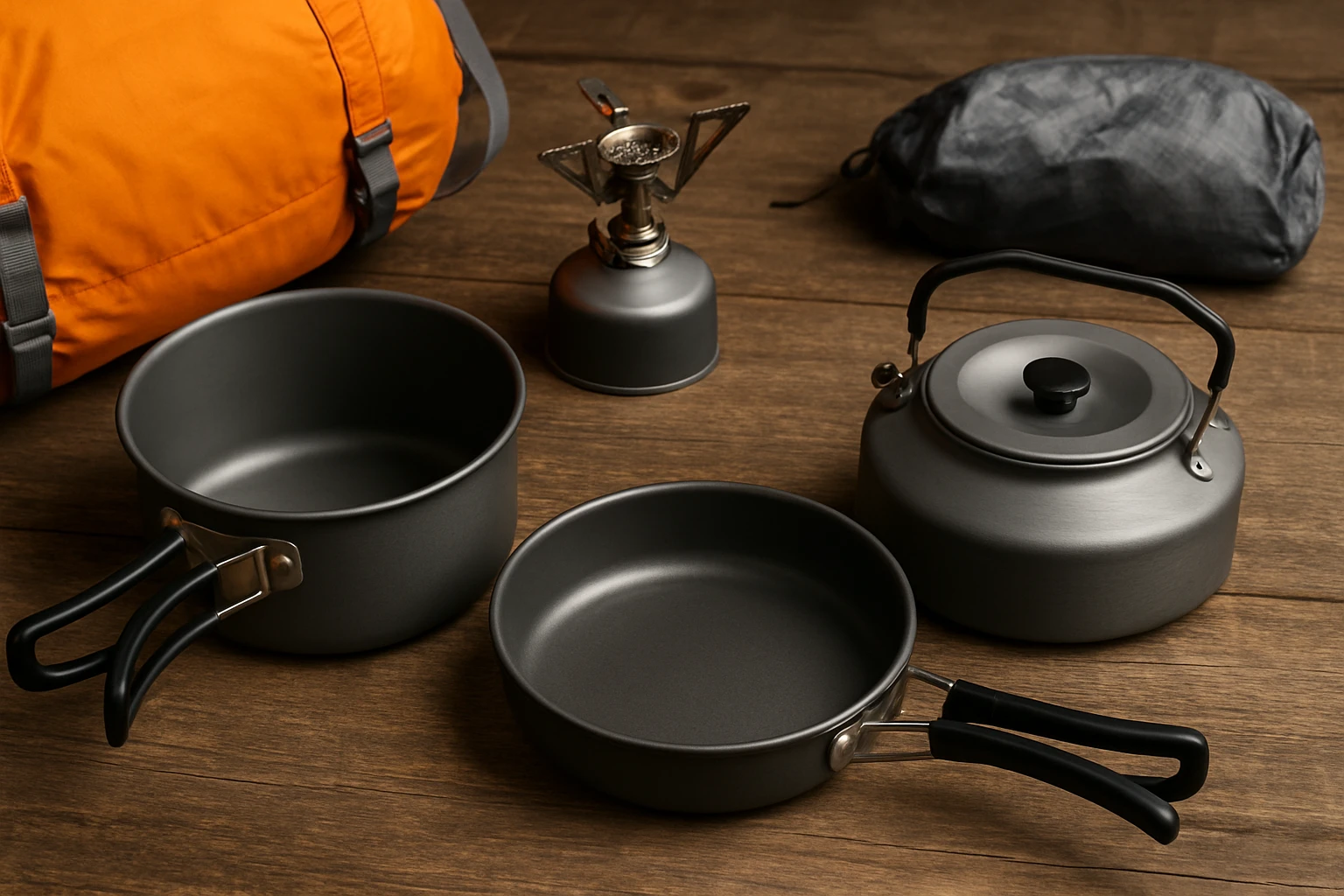
This guide explains how ultralight backpacking cookware influences overall pack weight, cooking efficiency, and enjoyment on trips of varying duration. Readers will learn essential criteria, how trip length changes priorities, and which products provide the best balance of weight, durability, and versatility. By the end of the article, one will be able to match personal needs with a specific cookware system and avoid common pitfalls that reduce comfort on the trail.
The discussion is grounded in real‑world data from five highly rated Amazon items. Each recommendation includes price, rating, and key specifications so that the advice remains actionable. The structure moves from foundational concepts to a detailed comparison matrix, followed by best‑practice tips and a concise FAQ.
Background and Context
Backpacking cookware traditionally consists of a pot, pan, and a set of utensils. In the ultralight niche, manufacturers reduce weight by using titanium, aluminum, or high‑performance polymers, and by integrating folding handles and nesting designs. The material choice directly affects heat conductivity, durability, and taste preservation. Titanium, for example, offers excellent corrosion resistance and does not react with acidic foods, but it is more expensive than aluminum.
Weight is measured in grams or ounces, while capacity is expressed in milliliters or fluid ounces. A typical day‑hike meal may require only 300 ml of water, whereas a multi‑day trek often needs 1 L for rehydrating meals and boiling water for sanitation. Understanding these metrics allows a backpacker to calculate the incremental load added by each piece of cookware.
Beyond raw numbers, user experience matters. Reviews consistently highlight ease of cleaning, stability over a campfire, and the practicality of foldable handles. These qualitative factors are incorporated into the selection framework presented later.
Key Concepts for Selecting Ultralight Cookware
Three primary concepts drive the decision‑making process: material, weight‑to‑capacity ratio, and modularity. Each concept is explored below, and product examples illustrate how manufacturers address them.
1. Material Selection
Titanium cookware, such as the iBasingo Titanium Cookset, provides a weight advantage of roughly 30 % compared with stainless steel while resisting corrosion. The set includes a 750 ml pot and a 300 ml pan, together weighing 130 g, which is ideal for short trips where every gram counts.
Aluminum options, exemplified by the Fire‑Maple Frost MINI Cookware Set, conduct heat more rapidly, reducing fuel consumption. However, aluminum can react with acidic foods, potentially altering flavor. The Frost MINI set weighs 186 g and nests for a compact 135 × 135 × 78.5 mm footprint.
Hybrid designs combine silicone and reinforced nylon, as seen in the Sea to Summit Frontier Dinnerware Set. These pieces are collapsible, offering near‑zero weight impact for those who prioritize space over cooking performance.
2. Weight‑to‑Capacity Ratio
Weight‑to‑capacity ratio indicates how much food or water a pot can hold relative to its mass. A lower ratio suggests greater efficiency for long trips. The GRITR Titanium Mess Kit provides a 33.8 oz (1 L) canteen and a 25.4 oz mess tin, together weighing approximately 267 g, delivering a ratio of about 0.27 g per ml.
In contrast, the BeGrit Mini Camping Cookware Set includes a 500 ml pot and a 300 ml pan, with a total weight of 620 g. While heavier, the set offers stainless‑steel durability and a versatile 4‑in‑1 design, which may appeal to users who value robustness over minimal weight.
3. Modularity and Storage
Modular kits allow users to add or remove components based on trip length. The iBasingo set folds its handles and includes a mesh storage bag, enabling rapid packing. The GRITR kit adds a spork with a bottle opener and a nylon bag with an adjustable strap, enhancing accessibility during multi‑day treks.
Collapsible silicone bowls, as in the Sea to Summit Frontier set, nest within a 2 L pouring pot, reducing bulk for day hikes where cooking is limited to reheating meals.
Choosing Cookware by Trip Length
Trip length fundamentally reshapes the weighting of criteria. The following subsections outline recommendations for three common categories: day hikes, weekend trips (2‑4 nights), and extended expeditions (5 + nights).
Day Hikes (0‑1 Night)
For day hikes, the primary goal is to minimize weight while retaining the ability to heat water for coffee or a quick snack. A single‑pot solution with a foldable handle is sufficient.
- Recommended product: iBasingo Titanium Cookset. Weight 130 g, 750 ml pot capacity, titanium construction prevents flavor alteration.
- Key advantage: The set occupies less than 200 ml of pack space when folded.
- Consideration: The set does not include a dedicated cup; a lightweight silicone cup can be added if desired.
Weekend Trips (2‑4 Nights)
During a weekend excursion, a backpacker typically prepares two to three meals per day and may need to boil water for rehydrated meals. A two‑piece system with a pot and a pan, plus a cup, balances weight and functionality.
- Recommended product: Fire‑Maple Frost MINI Cookware Set. Total weight 186 g, 500 ml pot and 300 ml frypan, nested design saves space.
- Additional accessory: Pair with a collapsible silicone cup from the Sea to Summit Frontier set for a complete meal solution.
- Key advantage: Aluminum heats quickly, reducing fuel consumption on short trips.
Extended Expeditions (5 + Nights)
Longer trips demand larger capacities, durability, and the ability to multitask (e.g., simmering stews, boiling water, and preparing side dishes). A comprehensive mess kit with a canteen, mess tin, cup, and multi‑function utensil is optimal.
- Recommended product: GRITR Titanium Mess Kit. Includes a 1 L canteen, 25.4 oz mess tin, 13.5 oz cup, and a spork with bottle opener. Weight approximately 267 g.
- Secondary option: BeGrit Mini Camping Cookware Set. Stainless‑steel construction, 4‑in‑1 design, total weight 620 g, suitable for users who prioritize durability over minimal weight.
- Key advantage: The GRITR kit provides volume markings for precise water management, crucial on extended trips where resupply is limited.
Comparison and Selection Guide
The table below summarizes the most relevant specifications for each featured product, enabling quick visual comparison.
| Product | Material | Weight (g) | Capacity (ml) | Price (USD) | Rating |
|---|---|---|---|---|---|
| iBasingo Titanium Cookset | Titanium (99.8%) | 130 | 750 ml pot / 300 ml pan | 38.88 | 4.3/5 (84 reviews) |
| GRITR Titanium Mess Kit | Titanium (100%) | 267 | 1000 ml canteen / 750 ml mess tin / 400 ml cup | 129.99 | 4.7/5 (29 reviews) |
| Fire‑Maple Frost MINI Set | Aluminum | 186 | 500 ml pot / 300 ml frypan | 24.95 | 4.6/5 (5 reviews) |
| BeGrit Mini Camping Cookware Set | Stainless steel | 620 | 500 ml pot / 300 ml pan (plus cup) | 17.99 | 4.4/5 (1,332 reviews) |
| Sea to Summit Frontier Dinnerware | Silicone & nylon‑reinforced | ~50 (estimated) | Medium bowl 300 ml, Large bowl 600 ml, Cup 250 ml | 54.95 | 4.7/5 (57 reviews) |
When evaluating the table, consider the following decision rules:
- If total pack weight must remain under 200 g, prioritize titanium options such as iBasingo or GRITR.
- If cooking versatility and larger capacity are essential, select GRITR for its canteen and mess tin combination.
- If budget constraints dominate, BeGrit offers the lowest price per gram, albeit with higher overall weight.
- If space is the limiting factor, the nested Fire‑Maple Frost MINI or collapsible Sea to Summit set provide the smallest packed volume.
Best Practices and Tips for Ultralight Cooking
The following actionable recommendations help backpackers maximize efficiency regardless of the chosen cookware.
- Pre‑measure ingredients at home to reduce the need for large measuring devices on the trail.
- Use a windscreen around the stove to improve fuel efficiency, especially when using lightweight aluminum pans.
- Carry a small silicone spatula; it folds flat and does not add significant weight.
- Clean cookware with a biodegradable scrub pad while still warm to prevent food residue from hardening.
- When possible, combine cooking and water purification by boiling water in the same pot used for meals.
- Check for loose handles before departure; titanium handles can become fatigued after repeated folding.
Frequently Asked Questions
1. Does titanium affect the taste of food? Titanium is chemically inert, meaning it does not react with acidic or alkaline foods. Users report that flavors remain unchanged compared with stainless steel.
2. Can aluminum cookware be used over an open flame? Yes, aluminum conducts heat quickly and tolerates open flame, but it can warp if exposed to excessive heat for prolonged periods.
3. How much water should I boil for a three‑day trip? A safe guideline is 2 L per day for drinking, cooking, and hygiene. A 1 L canteen, such as the one in the GRITR kit, will need to be refilled twice daily.
4. Is it worth buying a separate spork? Multi‑function utensils like the GRITR spork reduce overall weight by eliminating the need for separate fork, spoon, and bottle opener.
5. How can I protect my cookware during transport? Use the provided mesh or nylon storage bag, and place the kit in the middle of the pack surrounded by soft items to cushion impacts.
6. Are collapsible silicone bowls safe for hot liquids? The Sea to Summit Frontier set is rated for temperatures up to 200 °C, making it suitable for boiling water and hot meals.
7. What is the best way to clean titanium after cooking beans? Rinse with warm water immediately, then use a non‑abrasive scrub pad. Titanium does not retain stains, so minimal effort is required.
Conclusion
Choosing ultralight backpacking cookware requires balancing material, weight, capacity, and modularity against the specific demands of the planned trip length. Day hikers benefit from the feather‑light iBasingo Titanium Cookset, weekend adventurers may prefer the nested Fire‑Maple Frost MINI Set, and extended trekkers often select the comprehensive GRITR Titanium Mess Kit. By applying the comparison matrix and best‑practice tips, one can assemble a cooking system that minimizes pack weight while preserving culinary flexibility.
Products Featured in This Guide
iBasingo Titanium Cookset
Price: $38.88 | Rating: 4.3/5 (84 reviews)
Featured for its ultra‑light titanium construction, 130 g total weight, and foldable handles that suit day‑hike cooking needs.
GRITR Titanium Mess Kit
Price: $129.99 | Rating: 4.7/5 (29 reviews)
Featured for its comprehensive set including a 1 L canteen, mess tin, cup, and multifunction spork, ideal for multi‑day expeditions.
Fire‑Maple Frost MINI Set
Price: $24.95 | Rating: 4.6/5 (5 reviews)
Featured for its lightweight aluminum construction, nested design, and compatibility with standard gas canisters, making it perfect for weekend trips.
BeGrit Mini Camping Cookware Set
Price: $17.99 | Rating: 4.4/5 (1,332 reviews)
Featured for its stainless‑steel durability, 4‑in‑1 functionality, and low price point, suitable for budget‑conscious hikers.
Sea to Summit Frontier Dinnerware
Price: $54.95 | Rating: 4.7/5 (57 reviews)
Featured for its collapsible silicone and nylon construction, ultra‑compact storage, and suitability for lightweight day‑hike meals.