Introduction
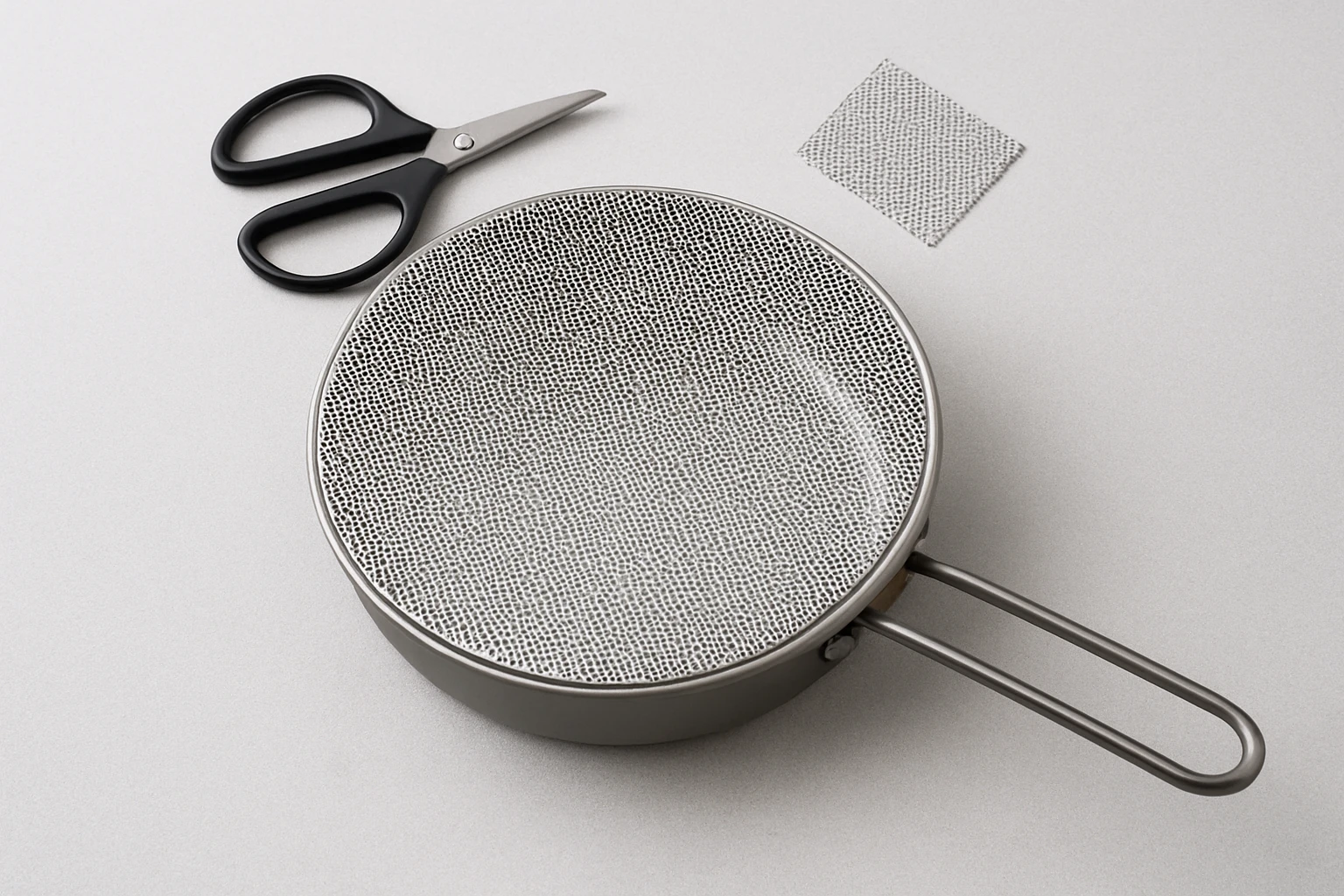
Backpacking enthusiasts often struggle with oily splatter when cooking with titanium pans over camp stoves. Excess grease can damage lightweight cookware, soil clothing, and attract wildlife. This guide explains how to construct an ultralight, reusable grease splatter guard that fits most portable titanium pans. The reader will learn which materials provide heat resistance, how to shape a foldable barrier, and how to integrate a commercial guard for added durability.
By following the steps, one will obtain a compact solution that reduces cleanup time, protects equipment, and improves safety on the trail. The approach balances minimal weight with reliable performance, ensuring the guard can survive repeated use without compromising the pack weight budget.
The guide also highlights a premium commercial option that can serve as a ready‑made alternative or a reference model for the DIY version. Understanding the trade‑offs between a homemade guard and a purpose‑built product enables the reader to make an informed decision based on budget, weight constraints, and cooking style.
Overall, the reader will finish with a functional splatter shield, a clear understanding of material selection, and a set of best‑practice tips for outdoor cooking.
What You'll Need
- Thin, heat‑resistant aluminum sheet (0.5 mm thickness) – 30 cm × 30 cm
- Lightweight carbon‑fiber or fiberglass reinforcement strips (5 cm × 2 cm)
- Heat‑stable silicone adhesive (food‑grade, BPA‑free)
- Miniature stainless‑steel hinges (2 mm pin diameter)
- Adjustable silicone spoon rest (optional for stability)
- Baetle Foldable Grease Splatter Guard
The commercial guard is listed first because it provides a benchmark for size, heat resistance, and ergonomics. The remaining items are readily available from outdoor or hardware suppliers and together weigh less than 120 g.
Step 1: Measure Your Titanium Pan and Stove
Accurate dimensions are essential to ensure the guard fits without interfering with flame or airflow. Place the pan on the stove and measure the diameter of the cooking surface, the distance between the pan rim and the flame, and the height of the pan walls. Record these values in centimeters.
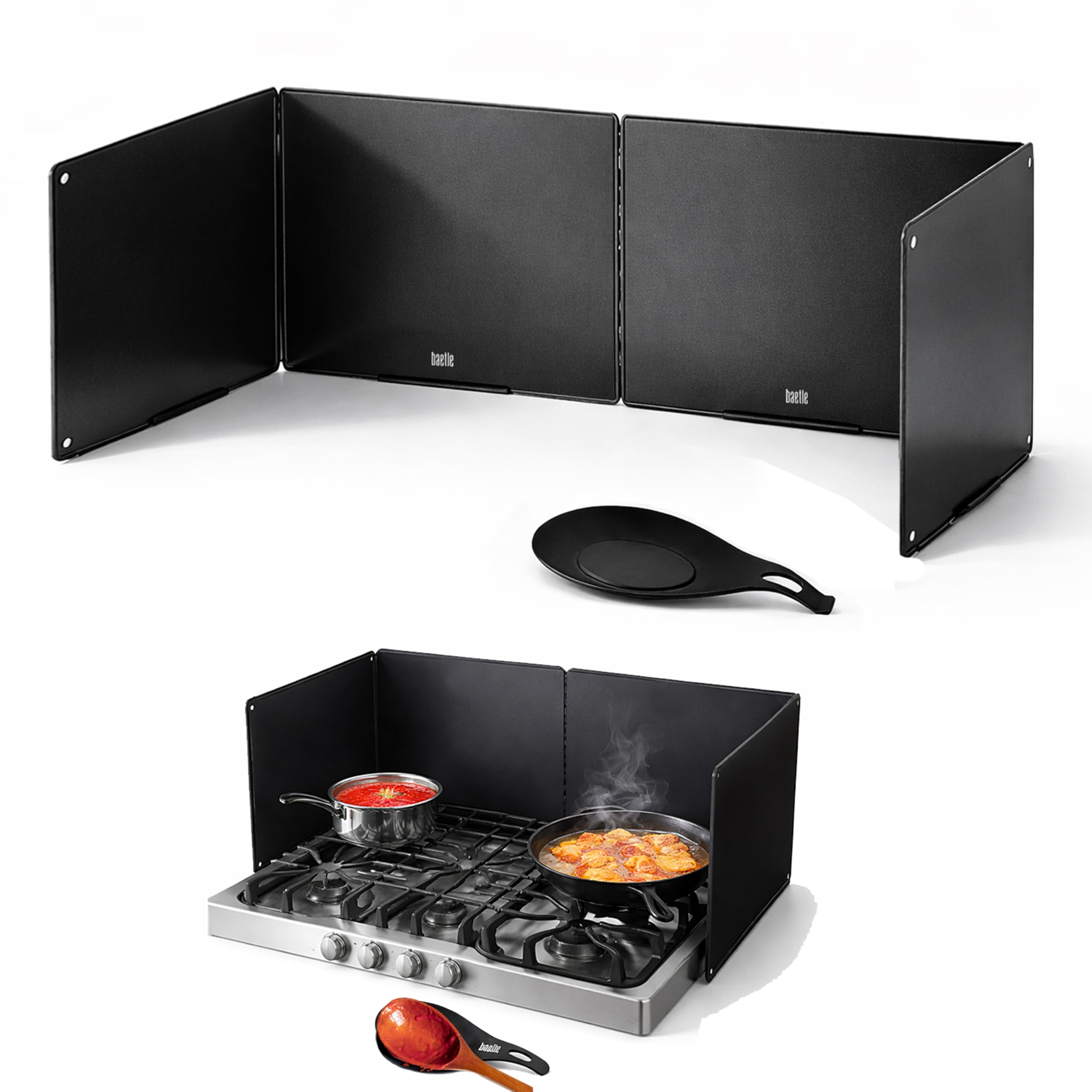
For most 20‑cm titanium pans, a guard width of 28 cm and a height of 10 cm provides sufficient coverage while allowing enough clearance for the flame. The Baetle Foldable Grease Splatter Guard measures 74.9 cm × 34.5 cm × 31.7 cm when open, which far exceeds typical backpacking needs, but its dimensions illustrate how a larger panel can be folded into a compact shape.
Note the maximum heat exposure of the stove; most backpacking canister stoves reach 200 °C (392 °F) at the flame tip. Choose materials that retain structural integrity at this temperature.
Document the measurements; they will guide the cutting and folding pattern in the next step.
Step 2: Cut the Aluminum Sheet to Size
Using a fine‑toothed metal snips, trim the aluminum sheet to the recorded width and height, adding a 1 cm allowance for the hinge attachment. The cut edges should be smooth to avoid cutting the user or the pan.
Aluminum is selected because it conducts heat evenly, preventing hot spots that could warp the guard. Its low density (2.7 g/cm³) contributes to the ultralight goal, and a 0.5 mm thickness offers sufficient rigidity without excessive weight.
After cutting, deburr the edges with a fine file or sandpaper. This step mirrors the hemmed edges of the Baetle product, which are designed to prevent accidental scratches.
Store the trimmed sheet in a protective sleeve to avoid bending before assembly.
Step 3: Reinforce the Guard with Carbon‑Fiber Strips
Apply a thin line of heat‑stable silicone adhesive along the perimeter of the aluminum sheet. Press the carbon‑fiber strips onto the adhesive, aligning them vertically on the back side of the panel. These strips increase bending resistance while adding negligible weight (approximately 5 g per strip).
The reinforcement technique mimics the protective base strips found on the Baetle Guard, which reduce countertop marking. In the trail context, the strips protect the guard from deformation when placed on uneven surfaces.
Allow the adhesive to cure for the manufacturer‑specified time, typically 30 minutes at ambient temperature.
Once cured, the panel will retain a slight flex, enabling it to fold without cracking.
Step 4: Install Miniature Hinges for Foldability
Mark two hinge locations 2 cm from each vertical edge, spaced 6 cm apart. Drill pilot holes using a 2 mm drill bit, taking care not to enlarge the holes.
Insert the stainless‑steel hinges, securing them with the supplied pins. Stainless steel is chosen for its corrosion resistance and ability to withstand repeated heating cycles.
These hinges create a two‑panel system that folds flat for packing, similar to the four‑panel design of the Baetle Guard but with a simpler configuration suited for ultralight travel.
Test the fold by opening and closing the panels several times; the motion should be smooth and free of binding.
Step 5: Attach the Silicone Spoon Rest (Optional)
If additional stability is desired, affix the silicone spoon rest to the front edge of the guard using a dab of silicone adhesive. The rest provides a non‑slip surface for ladles and spatulas, preventing them from contacting the hot pan rim.
The Baetle Guard includes a BPA‑free silicone spoon rest that is dishwasher‑safe and heat‑resistant. By incorporating a similar rest, the DIY guard gains the same convenience without adding significant bulk.
Ensure the rest is positioned so that it does not obstruct the flame or airflow.
Allow the adhesive to set fully before proceeding to the next step.
Step 6: Test Fit Over the Pan and Stove
Place the assembled guard over the titanium pan on the camp stove. The guard should sit just above the flame, covering the cooking surface while allowing air to circulate around the edges.
If the guard contacts the flame, raise it by a few centimeters using heat‑resistant silicone spacers. Conversely, if it sits too high, trim the rear edge by a millimeter to improve coverage.
Observe the guard during a short cooking session to ensure that grease droplets are captured on the underside of the panel. The aluminum surface will cool quickly, preventing burns when handling the guard after cooking.
Adjust hinge tension if the guard does not remain stable; a tighter hinge reduces wobble.
Step 7: Optimize Weight and Packability
After confirming functionality, evaluate the total weight of the guard. The aluminum sheet (approximately 80 g), carbon‑fiber strips (10 g), hinges (5 g), and optional silicone rest (15 g) sum to roughly 110 g.
To further reduce weight, consider replacing the aluminum with a thin titanium sheet (0.3 mm). Titanium offers comparable strength with a lower density, albeit at a higher material cost.
Fold the guard flat, securing the panels with a small clothespin or a reusable silicone strap. The compact profile should occupy less than 150 cm³ of pack space.
Compare this result with the commercial Baetle Guard, which weighs about 350 g and occupies a larger volume. The DIY version provides a significant weight saving for long treks.
Tips & Pro Tips
- Always test the guard with a low flame before full‑heat cooking to avoid accidental burns.
- Use food‑grade silicone adhesive to ensure the guard remains safe for contact with cooking oils.
- Apply a thin coat of high‑temperature spray paint to the aluminum surface if a darker finish is desired; this can reduce glare and improve aesthetic matching with the Baetle Guard.
- Carry a small cleaning brush to remove residue after each use; the non‑stick powder coating on the Baetle Guard demonstrates how easy cleaning can be when the surface is smooth.
- For extreme wind conditions, attach a lightweight wind‑shield extension to the rear panel using a small piece of ripstop nylon and silicone ties.
Troubleshooting
Problem: Guard warps after repeated heating.
Solution: Verify that the aluminum thickness is at least 0.5 mm and that the carbon‑fiber reinforcement is evenly applied. If warping persists, switch to a 0.6 mm sheet or use a titanium alternative.
Problem: Hinges become loose.
Solution: Tighten the hinge pins with a small needle‑nose pliers and apply a dab of silicone adhesive around the pin holes to prevent vibration‑induced loosening.
Problem: Grease still splatters onto the cooking area.
Solution: Increase the guard height by 1–2 cm or add a secondary angled panel to redirect oil droplets away from the pan.
Conclusion
This guide has demonstrated how to design and construct an ultralight, trail‑safe grease splatter guard tailored for titanium pans. By measuring the cooking setup, selecting heat‑resistant materials, reinforcing the panel, and adding foldable hinges, one achieves a functional shield that weighs under 120 g.
The Baetle Foldable Grease Splatter Guard serves as an excellent reference for size, durability, and convenience features such as the silicone spoon rest. While the commercial product offers ready‑made protection, the DIY version provides a customized, weight‑optimized alternative for serious backpackers.
With the tips, pro tips, and troubleshooting advice included, the reader can maintain the guard for many adventures, ensuring cleaner cooking, safer handling, and reduced wildlife attraction.
One is encouraged to experiment with material variations and to share improvements with the outdoor community, fostering continual innovation in lightweight cooking accessories.
Products Mentioned in This Guide
Frequently Asked Questions
What heat‑resistant material is best for a DIY ultralight grease splatter guard?
A thin sheet of silicone‑coated fiberglass or a high‑temperature polyester film (e.g., 150‑200 °C rating) works well and adds minimal weight.
How can I make the guard foldable for easy packing?
Score the material along a central line, then crease and attach lightweight hinges (e.g., aluminum or titanium clips) so it snaps flat when not in use.
Will a DIY guard protect my titanium pan from oil damage?
Yes, the barrier catches splatter, preventing oil from seeping into the pan’s surface and reducing corrosion risk.
How does a commercial splatter guard compare to the homemade version?
Commercial guards are pre‑shaped, often lighter, and may include reinforced edges, but they cost more than the DIY solution.
How do I clean and maintain the ultralight guard after cooking?
Wipe it with a damp cloth or rinse briefly; the heat‑resistant material dries quickly and can be reused for many trips.