Introduction
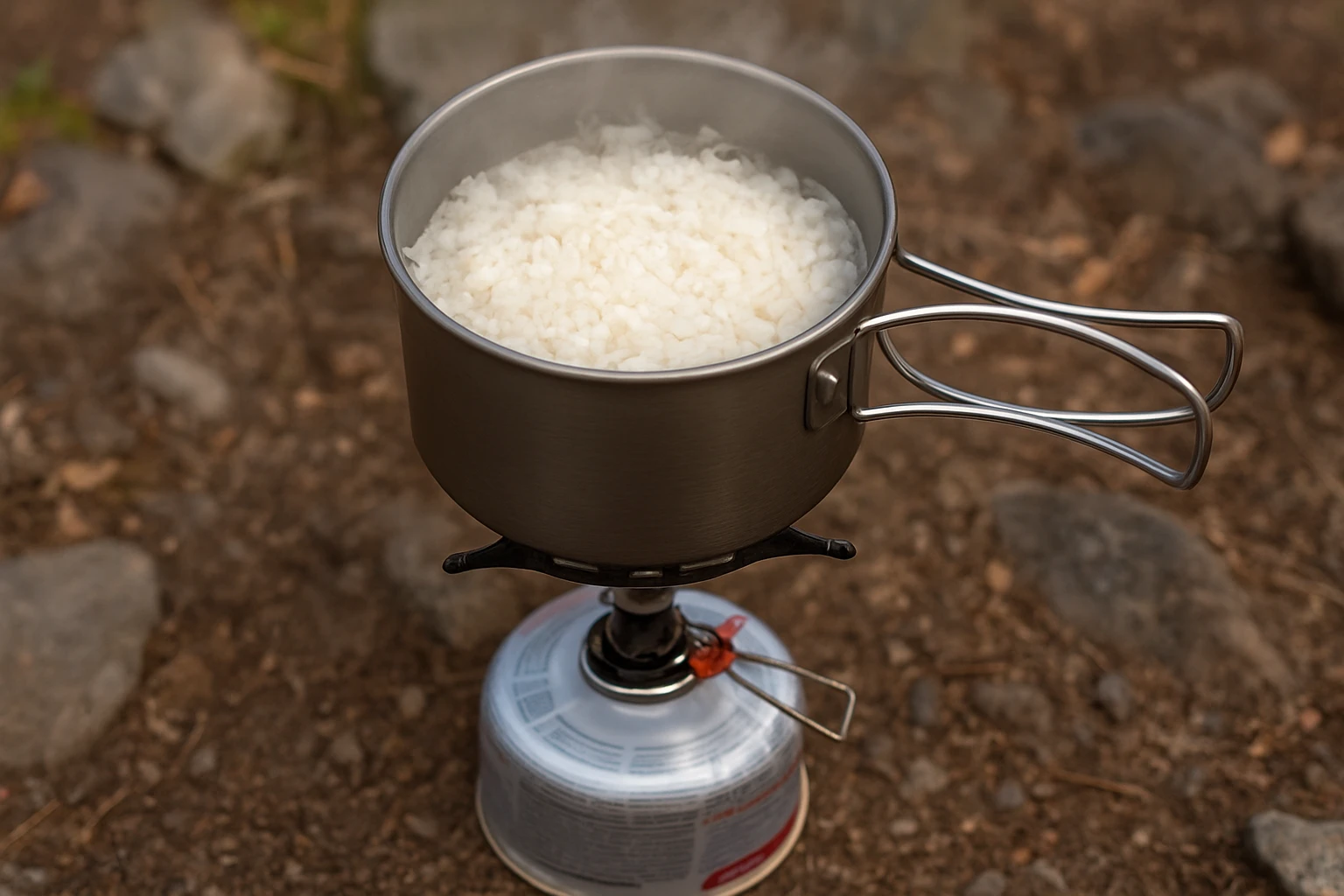
Cooking rice in the wilderness can feel daunting, yet it is a fundamental skill for any camper who values a warm, nutritious meal after a day on the trail. This guide explains how to simmer perfect rice on a canister stove, covering preparation, equipment selection, cooking technique, and troubleshooting. By following the steps, one will achieve fluffy, non‑sticky grains without needing a heavy kitchen setup, thereby saving pack space and fuel.
The value of mastering this technique lies in its versatility: rice pairs with beans, dehydrated vegetables, and even dried meats, turning a simple staple into a complete trail dinner. Moreover, the method works equally well for solo backpackers and family campers, making it a worthwhile addition to any outdoor cooking repertoire.
What You’ll Need
- Canister stove with fuel canister
- Lightweight pot (recommended: Odoland 10pc Camping Cookware Set)
- Measuring cup or scoop
- Stirring utensil (bamboo spatula included in the Odoland set)
- Water source (filtered or boiled)
- Optional: aiGear 3pc Camping Cookware Set for ultra‑compact travel
Step 1: Choose the Right Pot
The pot is the foundation of successful rice cooking. The Odoland 10pc Camping Cookware Set includes a 1‑liter anodized aluminum pot with a non‑stick coating and foldable, thermally insulated handles. At $29.99, it offers a 4.6‑star rating from 839 reviews, indicating reliability and durability. Its lightweight design (1.7 lb) minimizes pack weight while providing a surface that distributes heat evenly, preventing scorching.
For backpackers who prioritize minimalism, the aiGear 3pc Camping Cookware Set supplies a 0.54‑gal pot that weighs only 1.56 lb. Although smaller, it is constructed from hard‑anodized aluminum, delivering rapid, uniform heating. At $29.99 and a 4.4‑star rating, it serves well for one‑to‑two‑person meals.
Both options feature foldable handles that nest inside the pot, allowing the cookware to fit into the included mesh bag, thereby conserving space in the backpack.
Step 2: Measure Rice and Water Accurately
Use a standard measuring cup: one part rice to two parts water for most long‑grain varieties. For example, 1 cup (≈185 g) of rice requires 2 cups (≈470 ml) of water. If the pot includes a built‑in measuring line, follow it; otherwise, a small collapsible cup works well.
Rinse the rice in cold water until the runoff is clear. This step removes excess surface starch that can cause gummy texture. In a wilderness setting, a simple squeeze bottle or a clean water bottle can serve as a rinsing vessel.
Step 3: Pre‑Heat the Pot and Add Water
Place the pot on the canister stove and ignite the flame. Allow the water to reach a rolling boil before adding rice. Boiling first ensures that the cooking temperature remains consistent once the rice is introduced, which is crucial for even gelatinization of the starches.
The non‑stick coating of the Odoland pot reduces the likelihood of water boiling over, while the hard‑anodized surface of the aiGear pot resists warping under high heat, both contributing to a stable cooking environment.
Step 4: Add Rice and Initiate Simmer
Once the water is boiling, stir in the rinsed rice, then immediately reduce the flame to a low simmer. The ideal simmer produces a few gentle bubbles rather than a vigorous boil, which can break grains and cause uneven cooking.
Cover the pot with its lid (if included) or a lightweight aluminum foil. The lid traps steam, which is essential for the rice to absorb water uniformly. If using the Odoland set, the mesh bag can be repurposed as a makeshift cover in a pinch.
Step 5: Maintain a Consistent Low Heat
Monitor the flame and adjust it to keep the water at a steady simmer for 15‑20 minutes, depending on the rice variety. Avoid lifting the lid frequently, as each opening releases steam and prolongs cooking time.
Because the Odoland pot’s foldable handles are thermally isolated, one can safely adjust the pot’s position without burning the hands. The aiGear pot’s heat‑insulated ergonomic handle provides a similar safety advantage.
Step 6: Rest the Rice
After the simmer period, turn off the stove and let the pot sit, covered, for an additional 5‑10 minutes. This resting phase allows residual steam to finish cooking the grains, resulting in a fluffy texture.
Fluff the rice with the included bamboo spatula (Odoland) or a small silicone spoon. Avoid stirring vigorously, which can make the rice sticky.
Tips & Pro Tips
- Altitude Adjustment: At higher elevations, water boils at lower temperatures. Increase the water‑to‑rice ratio to 2.5 : 1 and extend simmer time by 3‑5 minutes.
- Fuel Efficiency: Use a windscreen around the canister stove to protect the flame, reducing fuel consumption while cooking.
- Flavor Boost: Add a pinch of salt, dried herbs, or a splash of broth powder to the water before boiling for enhanced taste.
- Multi‑Tasking: While the rice simmers, prepare a quick side such as rehydrated beans in the same pot after the rice is removed; the residual heat speeds up the process.
Troubleshooting
- Rice Too Hard: Increase simmer time by 2‑3 minutes and ensure the lid remains on.
- Rice Too Mushy: Reduce water slightly on the next attempt; the pot’s non‑stick surface helps prevent excess absorption.
- Boil‑Over: Lower the flame sooner or use a slightly larger pot; the Odoland pot’s wide rim mitigates splashing.
Conclusion
By selecting appropriate lightweight cookware, measuring ingredients precisely, and controlling heat, one can consistently produce perfectly simmered rice on a canister stove while camping or backpacking. The techniques outlined above empower outdoor enthusiasts to enjoy a comforting staple without sacrificing pack weight or fuel efficiency.
Practice the steps on a short hike, adjust for altitude and personal taste, and soon the aroma of rice will become a familiar part of every wilderness meal.
Products Mentioned in This Guide
Frequently Asked Questions
What water‑to‑rice ratio should I use when simmering rice on a canister stove?
Use a 2:1 ratio (2 cups water to 1 cup rice) for most long‑grain varieties, adjusting slightly for brown rice.
Can I cook rice in a lightweight pot without a lid?
A lid is essential; it traps steam and ensures even cooking, so use a pot with a snug-fitting lid.
How much fuel does simmering a cup of rice typically consume?
A 230 g canister stove usually burns about 5–7 g of fuel to bring water to a boil and simmer a cup of rice.
Why does my rice turn out sticky, and how can I fix it?
Sticky rice often results from excess water or stirring too much; use the correct water ratio and avoid stirring after the boil.
Is it safe to use untreated water from a stream for cooking rice?
No; always filter or boil water first to eliminate pathogens before using it for rice.