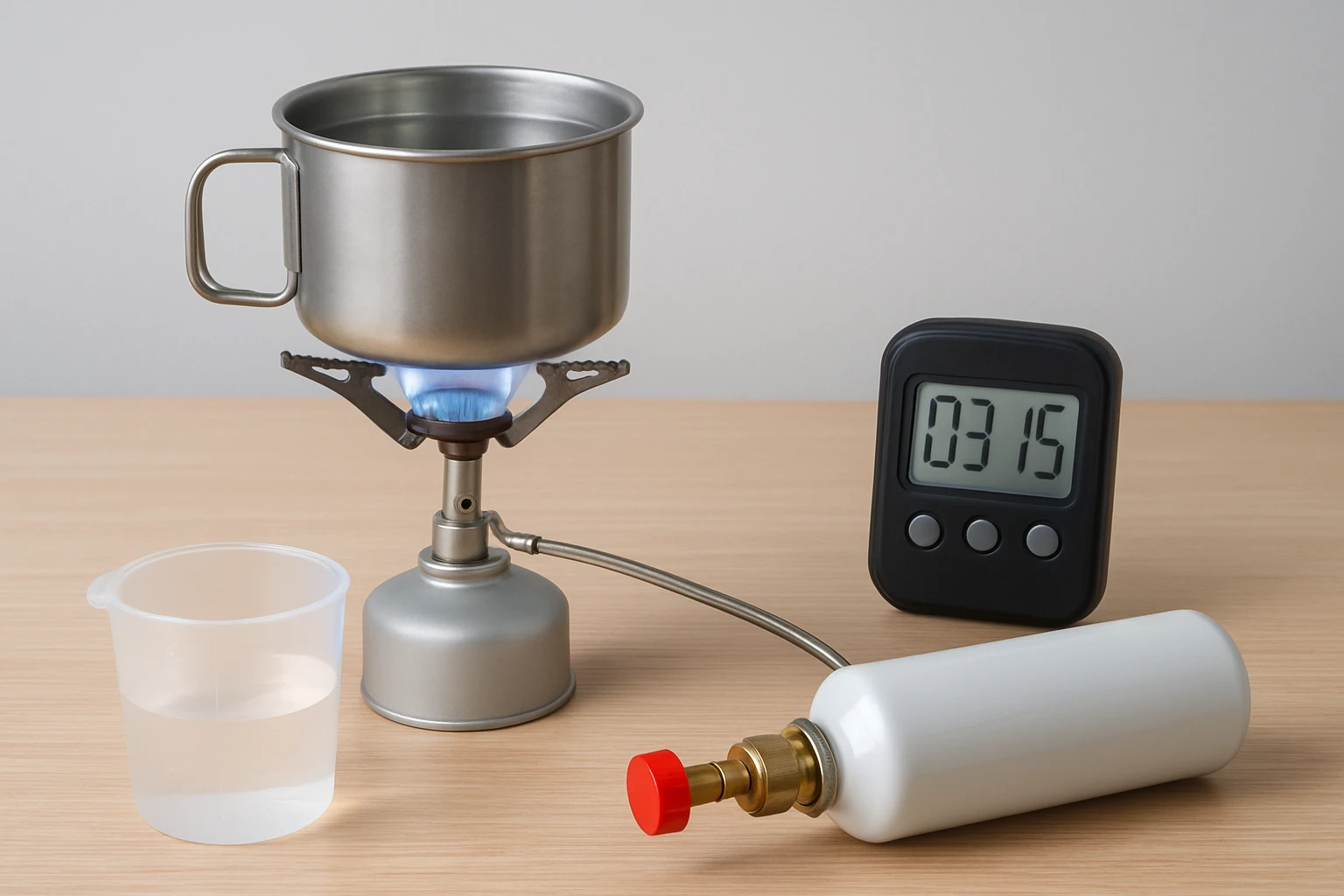
How to Test Backpacking Stove Efficiency at Home: Measure Boil Time & Fuel Use
Introduction
Backpacking enthusiasts often wonder how much fuel their stove consumes and how quickly it can bring water to a boil. This guide explains how to obtain accurate measurements of boil time and fuel usage using simple household tools. By following the procedure, one can compare different stoves, evaluate fuel canisters, and make informed purchasing decisions. The information is valuable for anyone who wants to optimise pack weight without sacrificing cooking performance.
What You'll Need
- Digital kitchen scale (minimum 0.1 g precision)
- Timer or stopwatch
- Thermometer capable of measuring 100 °C
- Measuring cup (500 ml capacity)
- Flat, stable surface for the stove
- Safety goggles and fire‑resistant mat
- YCDMLJC Portable Camping Stove (budget option)
- MSR PocketRocket Deluxe (premium option)
- Perune Iso‑Butane Fuel 100g (compatible fuel)
Step 1: Prepare a Controlled Test Environment
Choose an indoor area with good ventilation, such as a garage or a balcony, and lay a fire‑resistant mat on a flat surface. Place the digital scale on the mat and zero it to ignore the weight of the mat itself. Position the stove on the scale so that the entire unit, including the fuel canister, rests on the weighing platform. This arrangement ensures that any change in weight corresponds directly to fuel consumption.
Step 2: Measure Baseline Fuel Weight
Attach a full Perune Iso‑Butane Fuel 100g canister to the stove according to the manufacturer's instructions. Record the total weight displayed by the scale; this value represents the combined weight of the stove and the fuel. For consistency, repeat the measurement with the YCDMLJC Portable Camping Stove and the MSR PocketRocket Deluxe using separate fuel canisters. Document each baseline weight in a notebook for later comparison.
Step 3: Fill the Measuring Cup with a Standard Volume of Water
Using the measuring cup, pour exactly 500 ml of cold tap water into a lightweight pot that fits within the stove's cooking surface. Cold water provides a consistent starting temperature, reducing variability between trials. Verify the water temperature with the thermometer to ensure it is near 20 °C, which is typical for indoor conditions. Place the pot on the stove's burner, making sure the pot sits securely on the support brackets.
Step 4: Ignite the Stove and Start Timing
Activate the stove using its built‑in piezo igniter; both the YCDMLJC and MSR models feature reliable piezo ignition for rapid start‑up. Immediately start the stopwatch as soon as a stable flame is visible. Observe the flame for any irregularities; a steady blue flame indicates proper fuel‑air mixture. The timer will capture the exact duration required to bring the water to a rolling boil.
Step 5: Record Boil Time and Final Fuel Weight
When the thermometer reads 100 °C, stop the timer and note the elapsed seconds. Allow the flame to extinguish naturally, then record the new weight displayed by the scale. The difference between the baseline weight and the final weight equals the amount of fuel consumed during the boil. Perform three repetitions for each stove to obtain an average value, which improves reliability.
Step 6: Calculate Fuel Efficiency
Fuel efficiency is expressed as millilitres of fuel per minute of boil time. Convert the weight loss (in grams) to millilitres using the approximate density of isobutane‑propane fuel (0.78 g/ml). Divide the fuel volume by the boil time in minutes to obtain the efficiency figure. Compare the results across the YCDMLJC, MSR, and any other stoves you own to identify the most economical option.
Step 7: Document Results and Interpret
Create a simple table that lists each stove, average boil time, average fuel consumption, and calculated efficiency. Highlight any outliers, such as unusually long boil times that may indicate a clogged burner or low‑temperature fuel. Use the data to decide whether a higher‑priced stove like the MSR PocketRocket Deluxe justifies its cost through superior performance. Remember that efficiency gains can translate into lighter pack loads on multi‑day trips.
Tips & Pro Tips
- Conduct the test in a room with a stable ambient temperature; extreme cold or heat can skew results.
- Use the same pot and water volume for every trial to maintain consistency.
- Allow the stove to cool completely between repetitions to avoid residual heat affecting the next boil.
- For more precise fuel measurement, consider a laboratory‑grade balance, although a kitchen scale is sufficient for most users.
- When testing with the MSR PocketRocket Deluxe, take advantage of its pressure regulator; it maintains flame stability in colder environments, which can improve efficiency.
Troubleshooting
Problem: Flame sputters or goes out shortly after ignition.
Solution: Verify that the fuel canister is fully seated and that the valve is opened gradually. Check for debris in the burner ports and clean with a soft brush if necessary.
Problem: Boil time is significantly longer than advertised.
Solution: Ensure the wind‑resistant shield (if supplied) is positioned correctly. Test the stove in a draft‑free area, as wind can dramatically reduce heating efficiency.
Problem: Fuel weight does not change after a boil.
Solution: The scale may be on an uneven surface; recalibrate the scale and repeat the measurement. Also confirm that the correct fuel type (isobutane‑propane) is being used, as some canisters contain pure butane which burns at a lower temperature.
Conclusion
This guide has demonstrated how to measure boil time and fuel consumption for backpacking stoves using readily available tools. By recording baseline weights, timing the boil, and calculating fuel usage, one can objectively compare the performance of budget and premium stoves. The resulting data empower outdoor enthusiasts to select equipment that balances weight, cost, and reliability for their specific adventures. Applying these methods before a long trek ensures that every gram of fuel contributes effectively to nourishment on the trail.
Products Mentioned in This Guide
Frequently Asked Questions
What equipment is needed to test backpacking stove efficiency at home?
You need a digital kitchen scale (0.1 g), a timer or stopwatch, a thermometer that reads up to 100 °C, a 500 ml measuring cup, a stable surface, safety goggles, and a fire‑resistant mat.
How do you measure boil time for a backpacking stove?
Fill the cup with a known amount of water, start the timer as you ignite the stove, and stop it when the thermometer reads 100 °C.
What is the best way to calculate fuel consumption during the test?
Weigh the fuel canister before and after the boil; the difference in grams equals the fuel used.
Why is it important to test multiple stoves and fuel canisters?
Testing lets you compare boil times and fuel usage, helping you choose the most efficient stove and fuel for your pack weight and cooking needs.
Are there safety precautions to follow when testing a stove indoors?
Yes, always use safety goggles, a fire‑resistant mat, ensure good ventilation, and keep a fire extinguisher nearby.