
Ultimate Guide: How to Winterize Your Ultralight Backpacking Kitchen for Long Expeditions
Introduction
Winterizing a backpacking kitchen requires careful planning, reliable equipment, and knowledge of cold‑weather cooking principles. This guide explains the essential steps required to keep meals hot, fuel efficient, and gear functional during extended cold‑weather trips. Readers will learn how to select appropriate stoves, cookware, insulation, and maintenance practices for sub‑zero environments. The information presented balances theoretical understanding with practical product recommendations.
Background and Context
Cold temperatures affect the performance of canister stoves, liquid fuel systems, and metal cookware in several predictable ways. Air density increases, causing fuel to vaporize more slowly, while metal loses heat rapidly, extending boil times. Understanding these effects enables the backpacker to choose gear that mitigates the challenges of winter cooking. In addition, the weight constraints of ultralight travel demand that each item provide maximum utility per ounce.
Key Strategies for a Winterized Kitchen
Effective winterization can be divided into four core strategies: fuel management, heat retention, equipment protection, and procedural adjustments. Each strategy addresses a specific limitation imposed by low ambient temperatures.
Fuel Management
Fuel vaporization is the primary limiting factor for canister stoves in cold weather. Selecting a stove that operates efficiently with isobutane‑propane blends reduces the need for supplemental heat sources. The MSR PocketRocket 2 Stove excels in this area, boasting a 4.8‑ounce weight and a rapid 3.5‑minute boil time for one liter of water. Its self‑sealing threaded canister is compatible with globally available fuel, ensuring reliable performance on long expeditions. Users should store fuel canisters close to the body to keep them above freezing, and consider a fuel‑line pre‑heat sleeve for added reliability.
Heat Retention
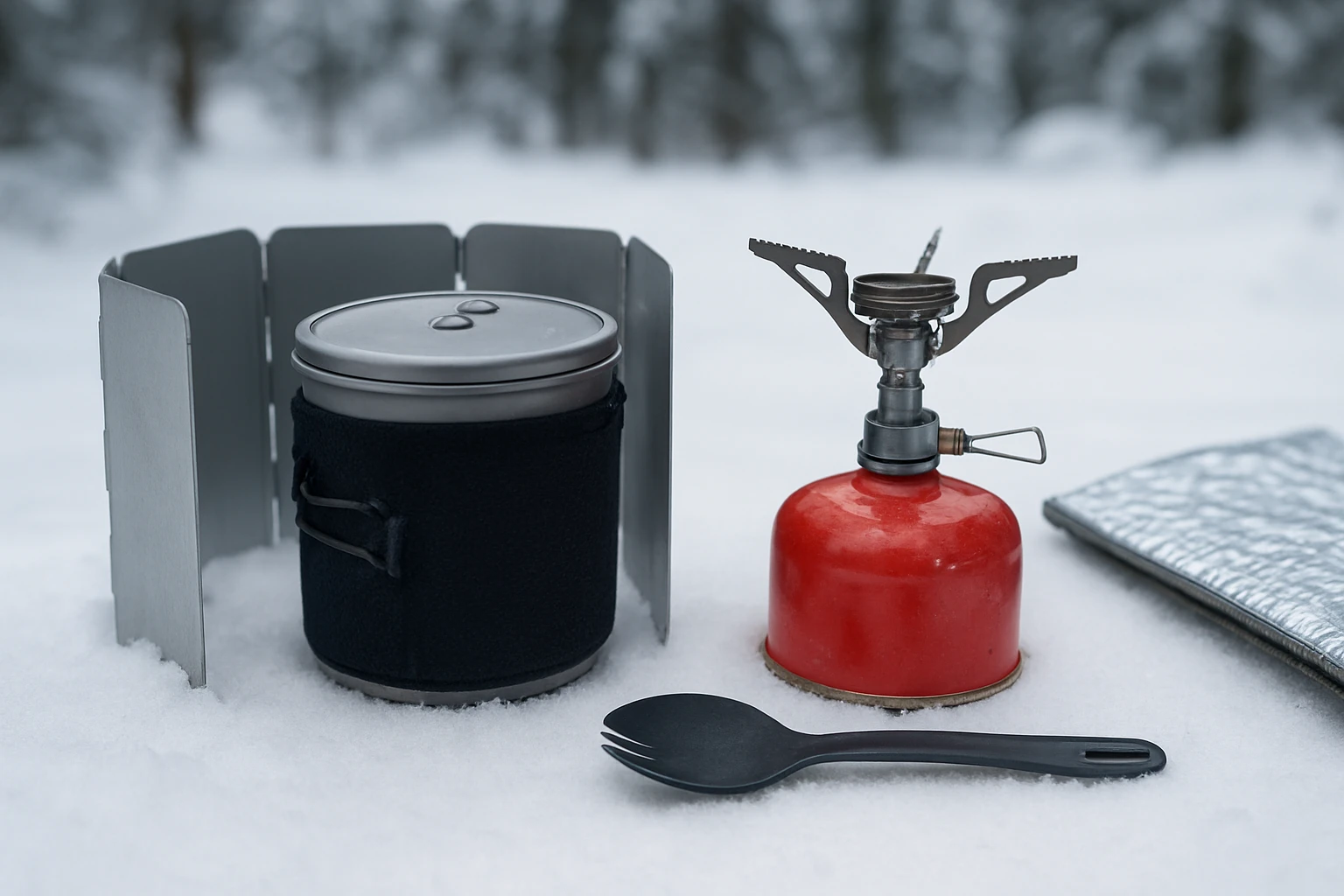
Maintaining heat within the cooking vessel reduces fuel consumption and shortens cooking times. Double‑wall insulated cookware, such as the Hydro Flask Stainless Steel Bowl, provides TouchShield™ insulation that keeps food hot while protecting hands from burns. The bowl’s 1‑quart capacity is ideal for solo or duo meals, and its stainless‑steel construction ensures even heat distribution. Adding a windscreen or cooking in a sheltered snow trench further conserves thermal energy.
Equipment Protection
Exposure to snow and ice can degrade delicate components such as stove igniters and pot supports. Storing the stove in its lightweight protective case, as supplied with the PocketRocket 2, prevents moisture ingress. For cookware, a silicone sleeve or a compact insulated bag protects the Hydro Flask Bowl from scratches and condensation. Regularly wiping metal surfaces with a dry cloth prevents ice buildup that could impair functionality.
Procedural Adjustments
Adapting cooking techniques to winter conditions improves efficiency. Pre‑heating the stove by lighting a small amount of fuel before the main flame stabilizes combustion. Using a simmer setting rather than a full boil for soups and stews conserves fuel while still achieving safe temperatures. Planning meals that require minimal boiling, such as dehydrated entrees rehydrated in a lid‑on bowl, reduces overall heat demand.
Comparison and Selection Guide
| Feature | MSR PocketRocket 2 Stove | Hydro Flask Stainless Steel Bowl |
|---|---|---|
| Weight (without case) | 2.6 oz | ~8 oz (estimated) |
| Boil Time (1 L water) | 3.5 minutes | N/A |
| Fuel Type | Isobutane‑propane canister | N/A |
| Insulation | None (stove body) | TouchShield double‑wall |
| Capacity | N/A | 1 quart |
| Rating | 4.8/5 (4,261 reviews) | 4.7/5 (590 reviews) |
| Price | $49.05 | $29.95 |
The table highlights the complementary nature of the two products. The PocketRocket 2 provides rapid boiling capability, while the Hydro Flask Bowl retains heat and offers safe handling. Selecting both items creates a balanced ultralight kitchen that excels in winter conditions.
Best Practices & Tips
- Store fuel canisters inside an insulated jacket pocket to maintain optimal temperature.
- Use a windscreen made from lightweight aluminum or a simple snow wall to protect the flame.
- Carry a small amount of liquid fuel (e.g., white gas) as an emergency backup for extreme cold.
- Pre‑heat the stove by igniting a brief burst of fuel before the main cooking phase.
- Combine multiple meals in a single pot to reduce the number of heating cycles.
- After cooking, cover the bowl with its press‑in lid to preserve residual heat for up to 30 minutes.
- Inspect the stove’s igniter before each trip; replace the piezo element if it shows signs of wear.
Frequently Asked Questions
- Can the MSR PocketRocket 2 operate at temperatures below 0 °F?
- Yes, the stove functions in sub‑zero conditions, but fuel vaporization slows; keeping the canister warm improves performance.
- Is the Hydro Flask Bowl dishwasher safe after a winter trek?
- The bowl is dishwasher safe, but it is advisable to rinse off snow and salt residues before cleaning to prevent corrosion.
- How many liters of water can the PocketRocket 2 boil before the fuel canister is empty?
- A standard 230‑gram canister typically boils approximately 4 liters of water, depending on ambient temperature and wind conditions.
- What is the best way to transport the stove and bowl without adding bulk?
- Place the stove in its hard case and nest the Hydro Flask Bowl inside the same case or a separate silicone sleeve; both items fit comfortably in a 2‑liter daypack.
- Should I use a fuel additive for winter camping?
- Fuel additives are generally unnecessary for modern isobutane‑propane blends; maintaining canister warmth is more effective.
- Can I use the Hydro Flask Bowl for cooking directly over the flame?
- The bowl is designed for reheating and serving; direct flame exposure may damage the double‑wall insulation, so a pot or pan is recommended for direct cooking.
Conclusion
Winterizing an ultralight backpacking kitchen demands attention to fuel efficiency, heat retention, equipment protection, and adaptive cooking techniques. By selecting reliable gear such as the MSR PocketRocket 2 Stove and the Hydro Flask Stainless Steel Bowl, and by following the best practices outlined, backpackers can enjoy hot meals and dependable performance on long winter expeditions. The principles presented remain applicable across a range of cold‑weather scenarios, ensuring that readers are prepared for future challenges.
Products Featured in This Guide
MSR PocketRocket 2 Stove
Price: $49.05
Rating: 4.8/5 (4,261 reviews)
Featured because it provides ultralight, rapid boiling performance and reliable operation with globally available fuel canisters, essential for winter cooking.
Hydro Flask Stainless Steel Bowl
Price: $29.95
Rating: 4.7/5 (590 reviews)
Featured because its TouchShield double‑wall insulation retains heat and protects hands, making it ideal for serving hot meals after winter cooking.
