Introduction
Backpacking enthusiasts constantly seek ways to reduce pack weight while preserving nutrition and comfort. This guide explains how to break down the weight of an ultralight kitchen on a per‑person basis, offering practical calculations, gear recommendations, and actionable tips. Readers will learn how to evaluate stoves, cookware, flatware, and food, and will walk away with a clear plan to shave ounces without missing essential meals.
The article assumes a moderate level of outdoor experience; beginners will still benefit from the foundational explanations, while seasoned hikers will appreciate the nuanced product comparisons and weight‑saving strategies.
Background/Context
Weight is the most critical variable in long‑duration backpacking because every additional ounce increases fatigue and reduces overall speed. Kitchen weight typically accounts for 15‑25% of a total pack load, depending on the length of the trip and the type of cuisine desired. Understanding the components—fuel, stove, pots, pans, utensils, and food—allows hikers to make informed trade‑offs.
Ultralight philosophy emphasizes multi‑functionality, minimalism, and high energy‑density foods. By selecting gear with low mass, high durability, and versatile design, a hiker can maintain a balanced diet while keeping the overall load under 5 lb for a week‑long trek.
Understanding Ultralight Kitchen Weight
To calculate kitchen weight per person, start by listing each item and its mass in ounces. Convert ounces to grams if desired (1 oz ≈ 28.35 g). Add the weight of fuel canisters, which varies by fuel type and duration of use. Finally, factor in the weight of dehydrated meals, which typically range from 1.5 oz to 3 oz per serving.
Example calculation for a three‑day trek:
- Stove: 2.6 oz
- Cookware set: 6.5 oz
- Flatware: 3 oz
- Fuel (0.5 lb canister): 8 oz
- Food (3 meals × 2 oz each): 12 oz
Total kitchen weight equals 32.6 oz, or just over 2 lb. Adjusting any component can further reduce this figure.
Stove Selection
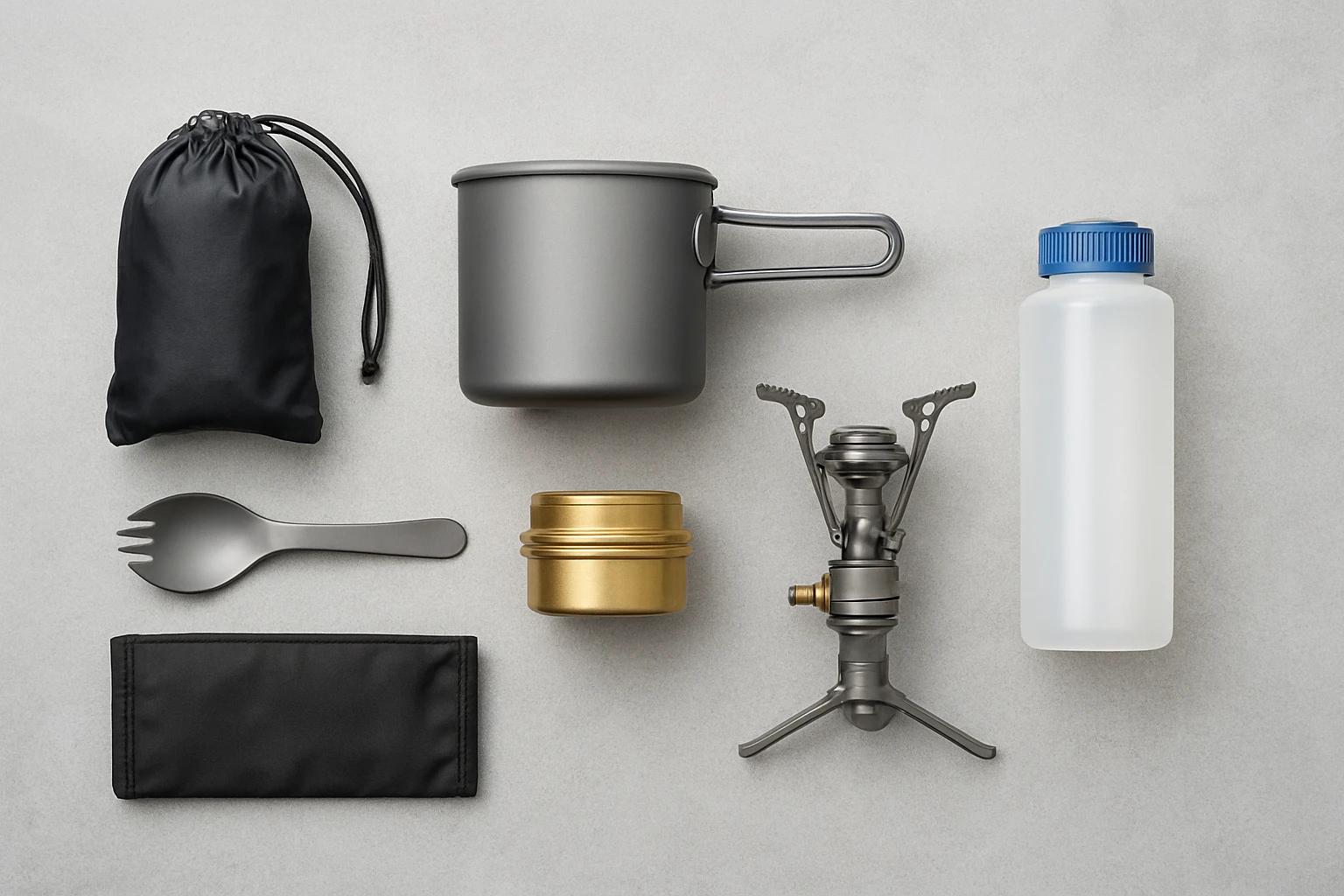
Choosing the right stove is the first step toward an ultralight kitchen. The stove must provide reliable heat output, fuel efficiency, and compact storage. The MSR PocketRocket 2 Stove excels in these areas.
Key specifications include a weight of 2.6 oz (4.2 oz with protective case) and a compact folded size of 2 × 2 × 3 in. It boils one liter of water in 3.5 minutes, offering a fast boil time that reduces fuel consumption. The stove uses high‑performance isobutane‑propane canisters, which are widely available worldwide, ensuring versatility for international travel.
Its 4.8‑star rating (4,229 reviews) reflects a strong consensus on durability and ease of use. The lack of priming or pre‑heating steps makes it ideal for rapid campsite setups, a valuable feature when weather conditions change quickly.
For hikers who prefer a built‑in igniter, the MSR PocketRocket Deluxe version adds a piezo igniter for a marginal weight increase, but the core performance remains identical.
Cookware Choices
Cookware must balance capacity, weight, and heat‑distribution efficiency. Two complementary options stand out: the Alocs Camping Cookware Set and the Bulin 1.5L Camping Pot.
The Alocs set includes three pots (2.2 L, 1.2 L, 1 L) and a non‑stick pan, all made from ultra‑light hard alumina with food‑grade silicone handles. The total packed weight is approximately 8 oz, and the set folds into a compact mesh bag, saving valuable backpack space. Its heat‑resistant, insulated handles protect fingers from burns, while the non‑stick coating reduces the need for additional cooking oil.
With a 4.5‑star rating (1,288 reviews), users praise its durability and ease of cleaning. The set’s modular nature allows hikers to select only the pots they need for a given trip, further trimming weight.
The Bulin 1.5L Camping Pot offers a different approach: a single, high‑efficiency pot featuring a heat‑exchange ring that reduces boil time by up to 30 %. Made from food‑grade hard‑anodized aluminum, the pot weighs roughly 5 oz and includes a foldable, heat‑proof handle that locks for safe use and folds flat for storage.
Its compatibility with the B15N stove enables a compact “pot‑and‑stove” configuration, allowing the stove and fuel canister to nest inside the pot’s base. This design can shave an additional ounce from the overall kitchen weight.
Flatware and Utensils
Flatware is often overlooked, yet it contributes a measurable amount to pack weight. The DZRZVD Camping Flatware Set provides a lightweight solution at a fraction of the cost of premium titanium sets.
The set includes a knife (0.7 oz), fork (0.9 oz), spoon (1.1 oz), and a nylon storage bag (0.3 oz), totaling 3 oz. Stainless‑steel construction ensures durability and resistance to corrosion, while the fold‑and‑lock handles keep the utensils compact.
Customers rate the set 4.2 stars (262 reviews), noting its solid feel and ease of cleaning. For ultralight hikers, the 3‑ounce total is negligible compared to the convenience of having reliable utensils for meal preparation and eating.
Food and Nutrition
Food is the heaviest single component of a backpacking kitchen, but freeze‑dried meals offer high caloric density with minimal weight. The Mountain House Beef Stroganoff exemplifies a balanced, high‑energy option.
Each pouch provides two servings for $10.88, weighing approximately 5 oz total. The meal contains real beef, mushrooms, and noodles, delivering a comforting, protein‑rich dinner after a long day on the trail. With a 4.5‑star rating (28,095 reviews) and a 30‑year shelf life, it serves both as a primary meal and as an emergency food reserve.
Because the pouch doubles as a bowl, no additional dishware is required, further reducing kitchen weight. Adding a small amount of olive oil or a spice packet can enhance flavor without adding significant mass.
Comparison/Selection Guide
| Component | Option | Weight (oz) | Key Benefits | Rating |
|---|---|---|---|---|
| Stove | MSR PocketRocket 2 | 2.6 | Fast boil, compact, universal fuel | 4.8 |
| Cookware | Alocs Camping Cookware Set | 8 | Multiple pot sizes, insulated handles | 4.5 |
| Cookware (single pot) | Bulin 1.5L Pot | 5 | Heat‑exchange ring, stove‑pot combo | 4.6 |
| Flatware | DZRZVD Camping Flatware Set | 3 | Ultra‑light stainless steel, lockable | 4.2 |
| Food (per 2‑serving meal) | Mountain House Beef Stroganoff | 5 | High protein, no‑cook bowl, long shelf life | 4.5 |
When selecting gear, prioritize items that serve multiple purposes. For example, the Bulin pot’s ability to store the stove and fuel inside reduces the number of separate containers, saving both weight and space.
Best Practices & Tips
- Combine fuel canisters when possible: use a single larger canister instead of multiple small ones to reduce container weight.
- Pre‑measure water: carry only the amount needed for cooking and hydration to avoid excess water weight.
- Utilize multi‑use items: a pot that also serves as a storage container or a spoon that doubles as a measuring tool cuts down on separate gear.
- Pack meals in reusable zip‑lock bags: this allows you to customize portion sizes and reuse the bag for trash, minimizing waste.
- Consider heat‑exchanger cookware: designs that capture more heat lower fuel consumption, directly translating to lighter fuel loads.
- Test gear at home: practice assembling and cooking with your chosen setup before hitting the trail to ensure efficiency and comfort.
FAQ
- What is the lightest reliable stove for high altitude?
- The MSR PocketRocket 2 is widely regarded as the lightest stove that maintains performance above 12,000 ft, thanks to its efficient fuel system.
- Can I use the Bulin pot with a canister stove other than the B15N?
- Yes, the pot’s universal base fits most standard canister stoves, though the nested storage feature is optimized for the B15N model.
- How many meals can I pack per pound of food?
- High‑calorie freeze‑dried meals average 2 oz per serving, allowing roughly eight meals per pound of food weight.
- Is stainless steel flatware safe for long‑term outdoor use?
- Stainless steel resists rust and corrosion, making the DZRZVD Camping Flatware Set a durable, low‑maintenance choice.
- Do freeze‑dried meals require a separate pot?
- Most Mountain House meals, such as Beef Stroganoff, are designed to be eaten directly from the pouch, eliminating the need for additional dishware.
- How can I reduce fuel weight without sacrificing boil time?
- Choose a pot with a heat‑exchange ring (e.g., the Bulin 1.5L Pot) and pair it with an efficient stove like the PocketRocket 2. Faster boil times mean less fuel burned per use.
Conclusion
By systematically analyzing each component of the backpacking kitchen, hikers can achieve significant weight reductions while preserving nutrition, flavor, and convenience. The combination of the MSR PocketRocket 2 Stove, versatile cookware options, ultra‑light flatware, and high‑quality freeze‑dried meals creates a balanced, ultralight system that can be tailored to any itinerary.
Implement the outlined calculations, compare the featured gear, and apply the best‑practice tips to craft a kitchen that adds value without excess mass. The result is a lighter pack, faster pace, and more energy for the adventures that matter most.
Products Featured in This Guide
MSR PocketRocket 2 Stove
Price: $49.95 | Rating: 4.8/5 (4,229 reviews)
Why it is featured: Provides rapid boil times, ultralight weight, and universal fuel compatibility, making it the cornerstone of an ultralight kitchen.
Alocs Camping Cookware Set
Price: $45.99 | Rating: 4.5/5 (1,288 reviews)
Why it is featured: Offers multiple pot sizes, insulated handles, and a compact mesh bag, delivering flexibility without excessive weight.
Bulin 1.5L Camping Pot
Price: $34.99 | Rating: 4.6/5 (860 reviews)
Why it is featured: Features a heat‑exchange ring that reduces boil time, a foldable heat‑proof handle, and compatibility with the B15N stove for a compact nested setup.
DZRZVD Camping Flatware Set
Price: $5.49 | Rating: 4.2/5 (262 reviews)
Why it is featured: Ultra‑light stainless‑steel utensils that fold and lock, providing essential eating tools for under 3 oz total weight.
Mountain House Beef Stroganoff
Price: $10.88 | Rating: 4.5/5 (28,095 reviews)
Why it is featured: High‑protein, comfort food that requires no additional cookware, offering excellent caloric density and a 30‑year shelf life.
Frequently Asked Questions
How much does a typical ultralight backpacking kitchen weigh per person?
Most ultralight kitchens range from 8 oz to 12 oz (225–340 g) per person, accounting for about 15‑25% of total pack weight.
What is the lightest stove option for a multi‑day hike?
A canister stove with a titanium burner or a alcohol stove in a lightweight cup can weigh 2‑3 oz and provide reliable heat.
Can I combine cookware to save weight?
Yes, using a single 0.5‑liter titanium pot that doubles as a pan and lid can cut 1‑2 oz off your kitchen load.
How much does food typically contribute to kitchen weight?
Food usually makes up 60‑70% of kitchen weight; dehydrated meals and calorie‑dense snacks can keep it under 6 oz per day.
What are the best ultra‑light flatware choices?
A titanium spork or a collapsible silicone spoon costs only 0.5‑1 oz and serves multiple functions.