
Introduction
Backpackers who venture into arid environments must balance minimal weight with reliable hydration and cooking solutions. This guide explains how to construct an ultralight desert‑hiking kitchen that conserves water while delivering nutritious meals. Readers will learn essential water‑saving concepts, product recommendations, and practical field techniques. By the end of the article, one will be prepared to trek longer distances with less water weight and greater confidence.
Background/Context
Desert ecosystems present extreme temperature fluctuations, low humidity, and scarce water sources, making efficient water use a survival priority. The human body loses water through sweat, respiration, and metabolic processes at rates that can exceed one liter per hour during intense exertion. Traditional backpacking kitchens often rely on heavy pots, large fuel canisters, and bulky water containers, which increase load and reduce mobility. Understanding thermodynamics, evaporation, and the principles of heat transfer enables hikers to select gear that maximizes efficiency while minimizing mass.
Efficient Water Management
Effective water management begins with precise planning of daily consumption based on climate, altitude, and activity level. A common rule of thumb for desert trekking is to allocate 3–4 liters of water per person per day, but this figure can be reduced through strategic shading, pacing, and the use of evaporative cooling techniques. Selecting containers that collapse when empty prevents dead weight, and using insulated sleeves reduces temperature‑induced evaporation. The following product exemplifies these principles.
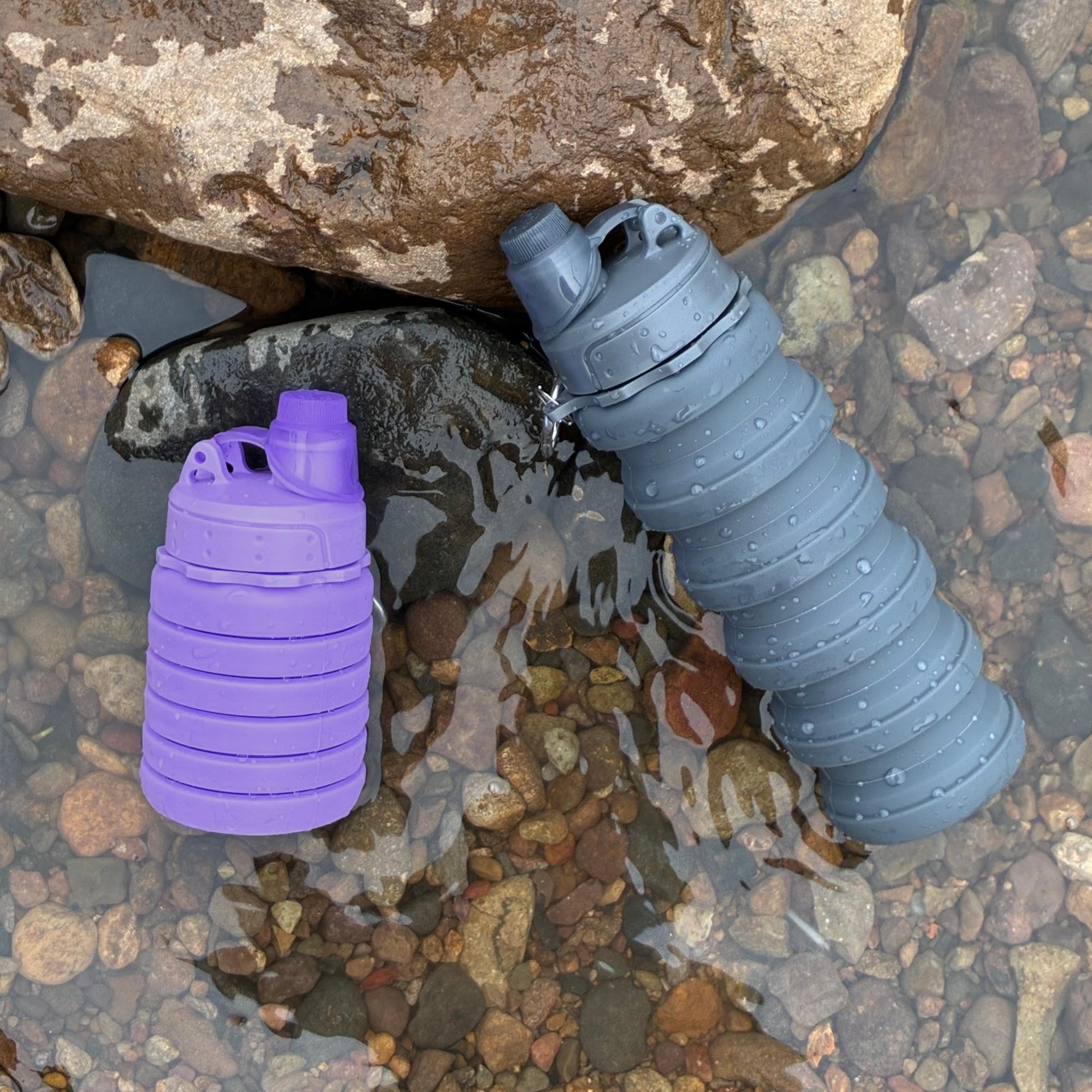
For compact hydration, the YCTMALL Collapsible Water Bottle offers a 500 ml capacity in a silicone shell that folds from 24 cm to 13.5 cm. Its food‑grade, BPA‑free material tolerates temperatures from –20 °C to 60 °C, ensuring safe storage of both cold and warm liquids. The integrated mountaineering buckle allows the bottle to hang from a pack, freeing interior space and reducing the need for separate water bladders. With a 4.1‑star rating from 1,889 reviewers, users praise its lightweight design and ease of cleaning, although some note the silicone can feel thin when fully loaded.
Ultralight Cooking Solutions
Cooking in the desert often requires boiling water to kill pathogens, which can consume a significant portion of limited supplies. Reducing boil time by using high‑conductivity cookware and minimal water volumes conserves both fuel and hydration. Aluminum, especially when anodized, distributes heat rapidly and requires less fuel than thicker steel pots.
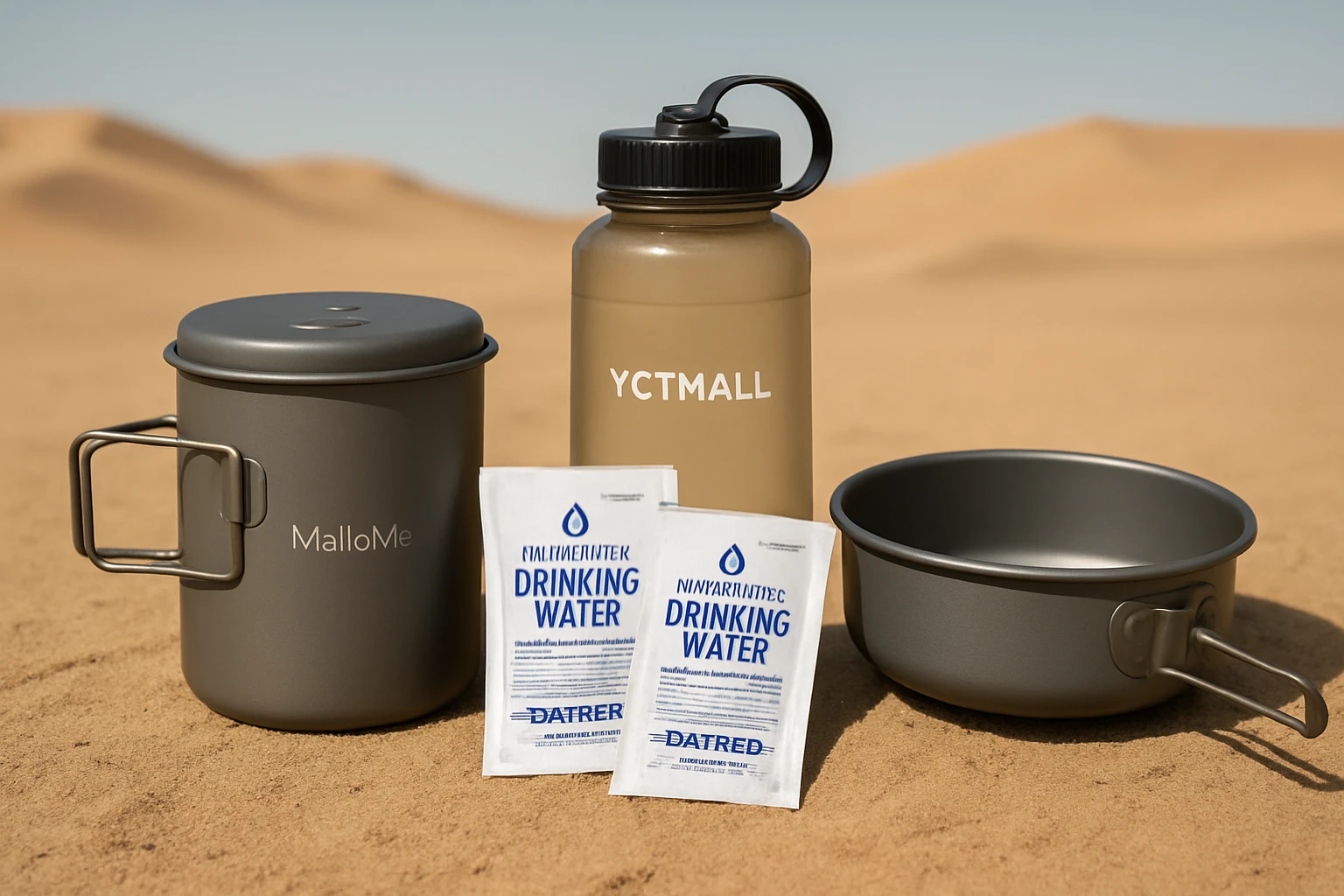
The MalloMe Camping Cookware Set delivers exactly this performance in a ten‑piece configuration. Constructed from non‑toxic anodized aluminum, the set includes a non‑stick pot, pan, two bowls, and essential utensils, all of which collapse into a compact travel bag. At $17.99 and a 4.5‑star rating from 9,420 reviews, hikers commend its durability and ease of cleaning. The set’s lightweight design (approximately 1.2 lb total) ensures that cooking does not become a burden on the trail.
When paired with a portable stove, the MalloMe set can bring water to a boil in under four minutes, dramatically reducing fuel consumption compared to larger, heavier kits. The included cleaning sponge and nylon drawstring pouch simplify post‑meal maintenance, an important consideration when water is scarce. By limiting the volume of water to the minimum required for rehydration, hikers can preserve a larger portion of their water cache for drinking.
Hydration Storage Options
In addition to collapsible bottles, long‑term water storage is essential for emergency scenarios where natural sources are absent. Individual sachets provide a lightweight, pre‑treated water supply that can be mixed with a small amount of fresh water to create a potable solution. This approach reduces the need to carry large volumes of water from the start of the trek.
The Datrex Emergency Water Packets supply 24 sachets, each capable of producing a 1‑liter serving of purified water, for a total of 24 liters of emergency hydration. Priced at $18.95 and holding a 4.6‑star rating from 3,737 reviewers, the packets are approved by the US Coast Guard, Canadian Coast Guard, and other maritime authorities, confirming their reliability in critical situations. Their lightweight, compact packaging makes them ideal for desert backpacks where every gram counts.
Because each sachet is sealed individually, the risk of contamination or leakage is minimized, and the packets can be stored for years without degradation. In a desert emergency, a single packet can sustain a hiker for several hours, providing a valuable safety net when water sources are unexpectedly unavailable.
Comparison/Selection Guide
Selecting the right gear depends on three primary factors: weight budget, expected water availability, and cooking frequency. The table below contrasts the three featured products across these dimensions.
| Product | Weight (approx.) | Water Capacity | Primary Use | Price |
|---|---|---|---|---|
| MalloMe Camping Cookware Set | ~1.2 lb | 0 L (cooking only) | Ultralight cooking | $17.99 |
| YCTMALL Collapsible Water Bottle | ~0.2 lb | 0.5 L | Everyday hydration | $13.99 |
| Datrex Emergency Water Packets | ~0.5 lb (24 sachets) | 24 L (when reconstituted) | Emergency water supply | $18.95 |
For hikers whose primary concern is minimizing daily water weight, the YCTMALL bottle offers the smallest footprint while still providing a usable volume. Those who anticipate cooking multiple meals per day will benefit from the rapid heating capabilities of the MalloMe set. Finally, any expedition that traverses water‑scarce terrain should allocate a portion of the pack weight to Datrex packets as a contingency plan.
Best Practices & Tips
Beyond gear selection, several operational practices further reduce water consumption. First, pre‑soak dehydrated meals in a minimal amount of water to extract flavor before boiling, thereby cutting the volume of water that must be heated. Second, use a reflective emergency blanket to create a solar still, capturing moisture from the ground and condensing it for drinking.
Third, schedule cooking during cooler morning hours to lower the temperature differential between the pot and ambient air, which reduces heat loss. Fourth, employ a windscreen around the stove to prevent convective cooling, which shortens boil times and conserves fuel. Fifth, consider re‑using cooking water for subsequent meals when safe, as the water already contains dissolved salts and nutrients that can enhance flavor.
Finally, regularly inspect all containers for micro‑cracks or seal degradation, especially after exposure to sand and dust. Maintaining airtight seals prevents inadvertent evaporation, a silent source of water loss in hot deserts.
FAQ Section
- How much water should I carry for a 3‑day desert trek? Aim for 3 L per day, but reduce this amount by 10‑15 % if you can reliably locate shade and plan to cook with minimal water.
- Can I use the MalloMe set on open‑flame campfires? Yes, the anodized aluminum tolerates open flame, but avoid direct contact with embers for more than five minutes to preserve the non‑stick coating.
- Are the Datrex packets safe to drink without additional filtration? The packets contain a proprietary purification system that meets USCG standards, making them safe to drink directly after reconstitution.
- Will the YCTMALL bottle retain flavor after repeated use? Food‑grade silicone is odor‑neutral, but prolonged exposure to strong‑smelling liquids may require thorough cleaning with a mild detergent.
- What is the best method to clean the MalloMe cookware in the field? Use the included cleaning sponge and a small amount of biodegradable soap; rinse with the least amount of water possible, reusing rinse water for cooking when appropriate.
- How do I prevent sand from entering my water bottles? Store the bottle inside a zip‑lock bag or use the bottle’s silicone sealing ring, which creates a tight closure that resists fine particles.
- Is it advisable to carry extra fuel for cooking in the desert? Yes, because higher ambient temperatures can increase fuel consumption; a 10‑15 % fuel reserve is recommended.
Conclusion
Creating an ultralight desert‑hiking kitchen revolves around conserving water, selecting high‑efficiency cookware, and preparing for emergencies with reliable hydration packs. By integrating the MalloMe Camping Cookware Set, YCTMALL Collapsible Water Bottle, and Datrex Emergency Water Packets, hikers can achieve a balanced system that minimizes weight while maximizing safety. The strategies outlined—such as cooking during cooler hours, using solar stills, and maintaining airtight seals—extend the utility of every drop of water. Armed with this knowledge, one can explore arid landscapes with confidence, knowing that both nourishment and hydration are within reach.
Products Featured in This Guide
MalloMe Camping Cookware Set
Price: $17.99
Rating: 4.5/5 (9,420 reviews)
Featured for its lightweight, anodized aluminum construction that reduces boil time and fuel consumption, essential for desert cooking.
YCTMALL Collapsible Water Bottle
Price: $13.99
Rating: 4.1/5 (1,889 reviews)
Featured for its 500 ml collapsible silicone design, which saves space and weight while providing reliable hydration in hot climates.
Datrex Emergency Water Packets
Price: $18.95
Rating: 4.6/5 (3,737 reviews)
Featured for providing 24 liters of instant, purified water in a compact, individually sealed format, ideal for emergency desert scenarios.
Frequently Asked Questions
How can I reduce water weight in a desert‑hiking kitchen?
Use collapsible water containers, pre‑hydrate meals, and cook with minimal water by using rehydrated foods and a tight‑fitting lid.
What type of cookware is best for ultralight desert cooking?
Titanium or thin‑wall aluminum pots with secure lids are ideal because they’re lightweight and retain heat efficiently.
How does fuel choice affect water usage?
High‑efficiency fuel canisters or alcohol stoves burn hotter, shortening cooking time and reducing the amount of water needed for cooling.
What are practical ways to conserve water while cooking in the desert?
Cook multiple meals in one pot, use a pot‑in‑pot heat‑exchange method, and always keep the lid on to trap steam.
How much water should I plan to carry per hour of hiking in arid conditions?
Plan for at least 1–1.5 L of water per hour of intense activity, adjusting for temperature and personal sweat rate.